Twenty years ago, a small team in the Czech Republic set out with an ambitious goal: to make beauty accessible to everyone. Today, this principle has grown into Notino’s mission – a major international company serving over 32 million customers.
What started as an online store offering just a few perfume products has become one of the largest players in the ʼBeauty & Healthʼ category in the European Union, now operating in 27 European countries.
The story of Notino is a story of belief in the power of beauty to change lives. What decisions helped the company earn customers’ trust? Find out in an interview with Jozef Taraba, Notino’s Logistics and Operations Director.

Jozef Taraba, Notino’s Logistics and Operations Director
Brand Origins
Let’s take a look back at how it all began. What were the first steps more than 20 years ago?
The story of Notino started in 2004 in the Czech Republic. The company’s founder, Michal Zamec, noticed that people were eager to buy their favorite fragrances in perfumery stores and kept coming back for more, even as prices continued to rise.
Michal then made a bet on the internet: he began sourcing perfumes directly from manufacturers and selling them online at better prices than traditional stores.
This approach coincided with market changes – demand for online purchases grew rapidly, and within a few years, the company expanded into other European markets.
What was the market context in the early 2000s? What challenges did you face?
Firstly, there were certain reservations among customers: online shopping was just beginning to gain popularity, and for many users, the internet felt unfamiliar and unreliable.
Secondly, companies themselves were only starting to explore e-commerce. Websites were basic, and many processes were handled through trial and error. So we were constantly looking for ways to simplify, speed up, and improve the shopping experience.
What philosophy guided the brand at the start, and how did it shape the business?
From day one, we believed that beauty should be accessible to everyone, and that vision has guided every step we took.
Instead of high markups, we chose a model based on competitive prices and large volumes, which allowed us to reach a wide audience and grow quickly.
All profits were reinvested into the company’s development: logistics, technology, expanding the product range, and improving customer service. We also optimized the website, developed a mobile app, and focused on personalization.
How did the product assortment begin?
We started with perfumes, as they were products customers knew well and felt comfortable buying online. Over time, the assortment expanded to include cosmetics, skincare, body and hair care products, as well as health-related items.
Today, our stores feature over 115,000 products from 1,800 brands. Perfumes remain our strongest category, accounting for more than 40% of all purchases.
What strategies helped the company stand out from its competitors?
We focused exclusively on online sales, even though many considered this approach too risky.
Another key factor was early international expansion. While most perfumery retailers were concentrating primarily on Western Europe, we grew in Central and Eastern Europe, where we saw significant potential. In addition to our online presence, we have gradually expanded into the offline space and now operate 27 branches across Europe.
Today, our largest markets are Poland, accounting for nearly 16% of total revenue, and the Czech Republic, at 12%. We also have a strong presence in Romania and Italy.
Scaling with Logistics at the Core
When and how did the company start developing its logistics operations?
For many years, all our European operations were coordinated from a single distribution center in Rajhrad near Brno. This setup allowed us to expand quickly in the early stages while maintaining tight control over processes.
The pandemic revealed the limitations of this model: a single center serving dozens of markets posed risks to delivery speed and reliability.
The opening of a second distribution center in Bucharest marked a strategic step and the beginning of a multi-center European logistics network. Today, this network handles over 32 million customers across 27 countries, reducing risks, shortening delivery times, and enabling long-term scalability.
Notino Key Metrics
- 32+ million customers across Europe
- 115,000 beauty & health products
- 1,800 brands available in the network
- 27 European countries – presence footprint
- 27 offline stores in 8 countries
What criteria did you use to choose countries for distribution centers? What was the most challenging part of this process?
The main factors in selecting a location were market maturity and growth potential. The logistics infrastructure had to match demand – as in Poland, where we process over 5 million orders annually.
Equally important was geographical balance. Our warehouses in the Czech Republic, Poland, Romania, and Italy are strategically positioned to efficiently serve multiple countries, reducing transit distances and improving service quality. Infrastructure connectivity, access to key transport corridors, and technological readiness also play a crucial role.
The most challenging aspect of this process is managing a network at such a scale.
Operating across different markets with varying customer expectations, carriers, and seasonal peaks requires continuous system integration and long-term investments in automation.
How did the development of warehouses and the expansion of their capacity evolve?
The evolution of Notino’s logistics is directly linked to the company’s growth.
The distribution center in Rajhrad remains the backbone of the network, processing nearly 15 million orders per year. The Romanian center has strengthened the company’s position in Southeast Europe, handling more than 4 million orders annually. The Łódź hub has become a key facility for Northern and Central Europe, processing almost 10 million orders each year. By comparison, the Italian center in Telgate serves Southern Europe, processing more than 3 million orders annually.
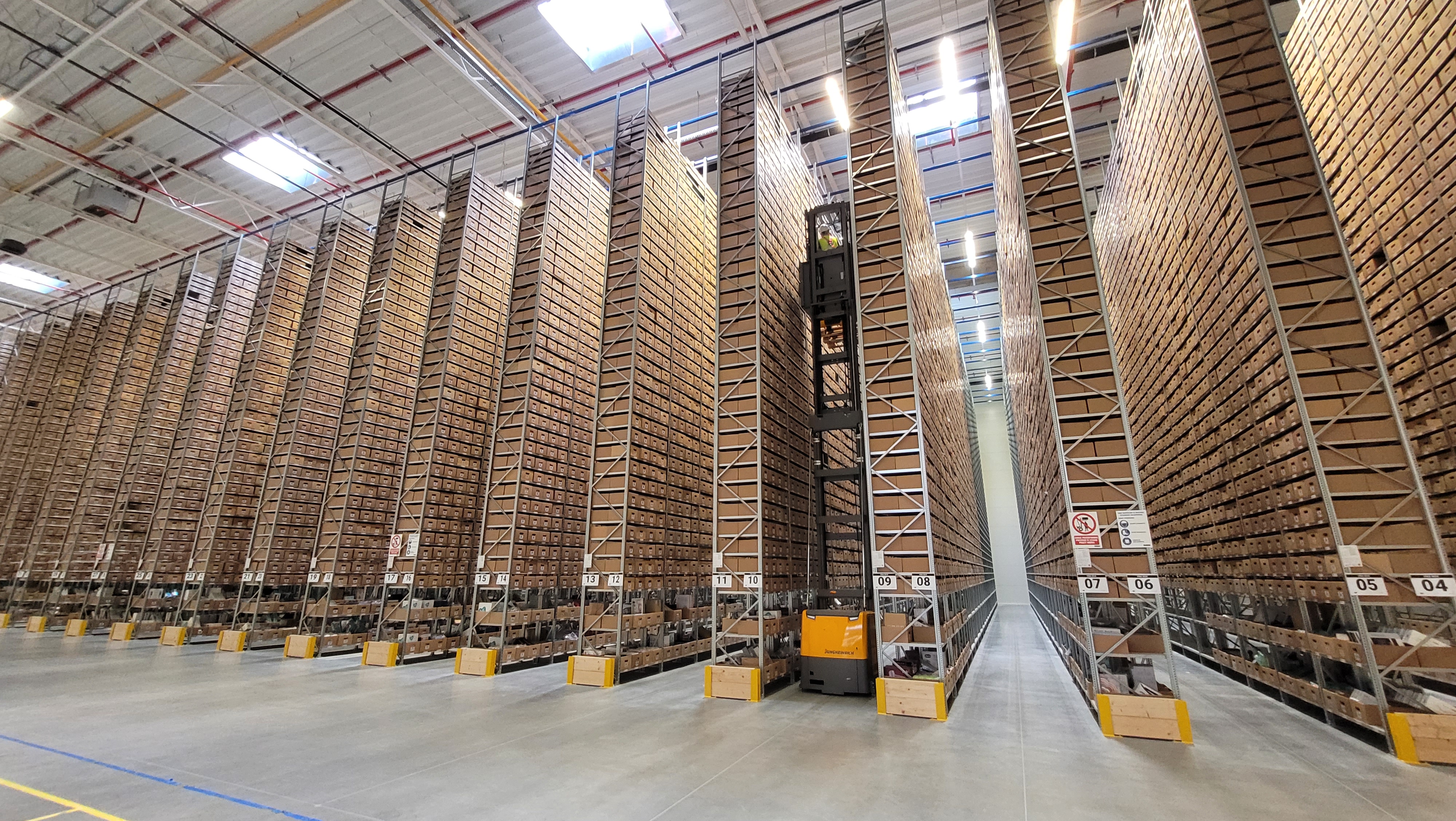
The distribution center in Rajhrad
At the same time, we follow a clear principle: scale must never come at the expense of service quality. That is why we begin preparing for peak seasons several months in advance – conducting detailed forecasting, planning workforce capacity, and stress-testing our systems.
For example, last year during Black Friday, we processed more than 4 million orders, and nearly the same volume during the Christmas season. Our Net Promoter Score (NPS) currently stands at 73%, indicating high customer satisfaction and a strong likelihood of repeat purchases.
To suit every taste
Who is the brand’s target audience in Ukraine, and what is the average purchase size?
We target customers aged 18 to 64 – both women and men.
Ukrainian customers actively use both the web platform and the mobile app. To date, more than 500,000 Ukrainians have installed the Notino mobile app.
According to our data, last year, 49% of purchases were made through the app and 51% through the website. The total number of orders in Ukraine reached approximately 1.2 million per year.
On average, each transaction includes three items.
Which countries are the most active on the platform, and how does the behavior of the Ukrainian audience differ from theirs?
The Czech Republic and Poland are the most mature markets for Notino. In these countries, the brand enjoys high recognition and long-standing consumer trust.
In terms of order volume, both markets also show strong and stable performance.
In the Czech Republic, customers place on average more than 300,000 orders per month, reaching up to 600,000 during peak periods.
In Poland, the monthly average is around 400,000 orders.
Compared to these markets, Ukraine is still in an active growth phase. However, Ukrainian consumersʼ behavior is evolving rapidly – particularly in mobile app usage and responsiveness to marketing campaigns.
Notino Beauty Trends
What are Notino’s strategic priorities for the next five years?
We will focus on stabilizing and growing the most dynamic European markets. Continued investments in logistics infrastructure, automation, and operational efficiency will support this.
A key focus will remain on the development of personalization and customer‑oriented digital tools. Notino aims to combine a broad and diverse product assortment with smart technological solutions that help users navigate our offerings, find the right products, and make confident purchase decisions.
At the same time, we plan to strengthen our presence in retail and develop an omnichannel approach that combines online and offline sales.
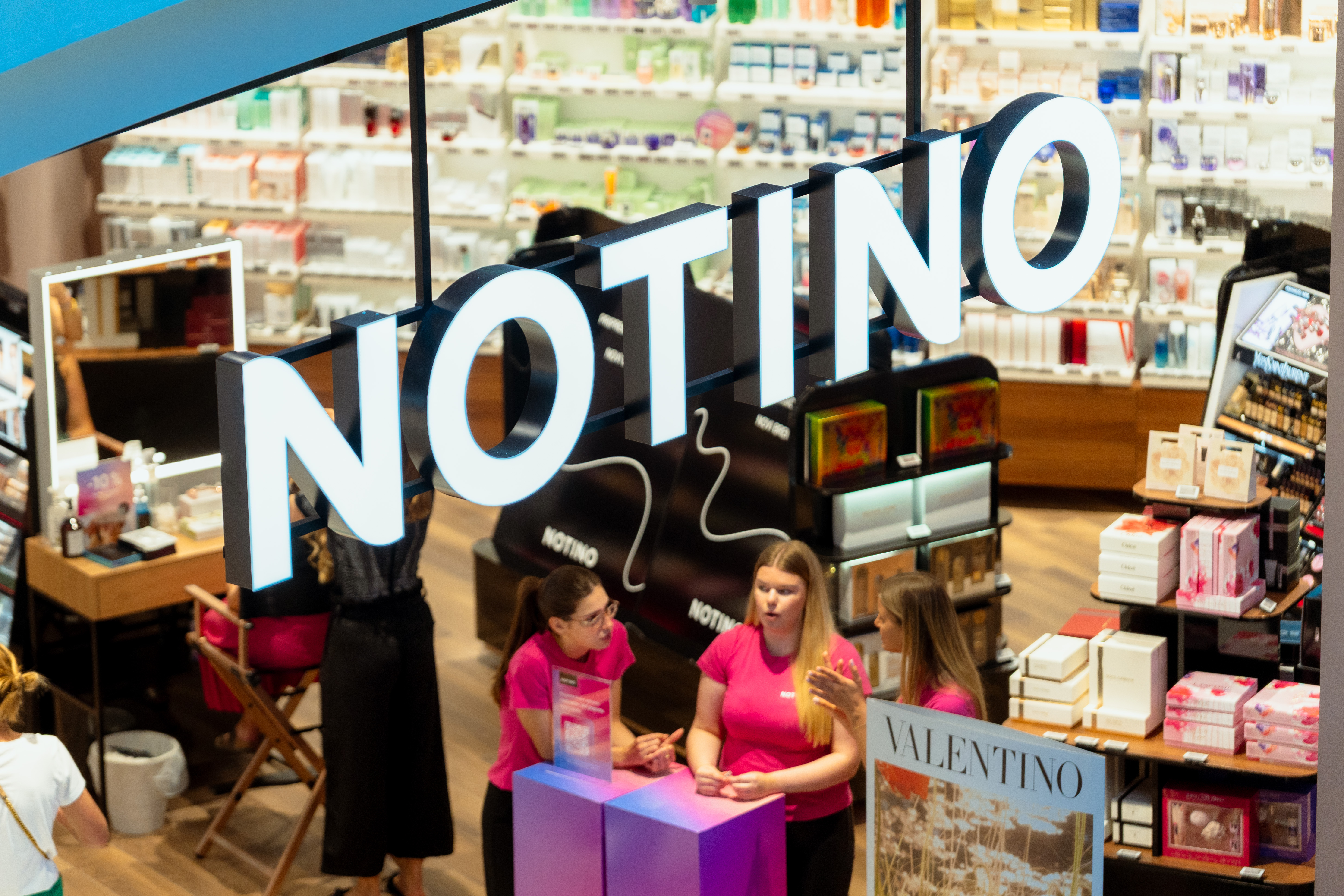
Notino store
What future trends do you see in the beauty and wellness industry, and how is Notino responding?
The beauty and wellness industry is entering a more mature phase, where trust, transparency, and the overall customer experience matter more than price or assortment size. Customers are making more informed purchase decisions and expect clear value, expert guidance, and seamless service across all touchpoints. As a result, fast and reliable delivery, high-quality service, and consistent communication are now baseline expectations rather than competitive advantages.
Another key trend is the growing importance of mobile platforms and apps for shopping, especially in the beauty segment, where customers seek inspiration, personalization, and confidence in their choices. Personalization, powered by data and AI, plays a crucial role in simplifying decision-making and building long-term relationships.
Notino is responding to these changes.
We are confident that combining technology with a broad, well‑structured product assortment will create a premium experience for our customers.