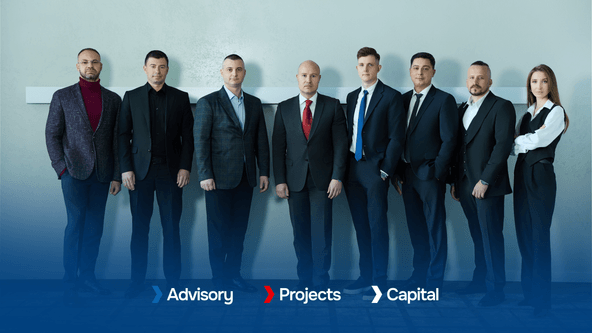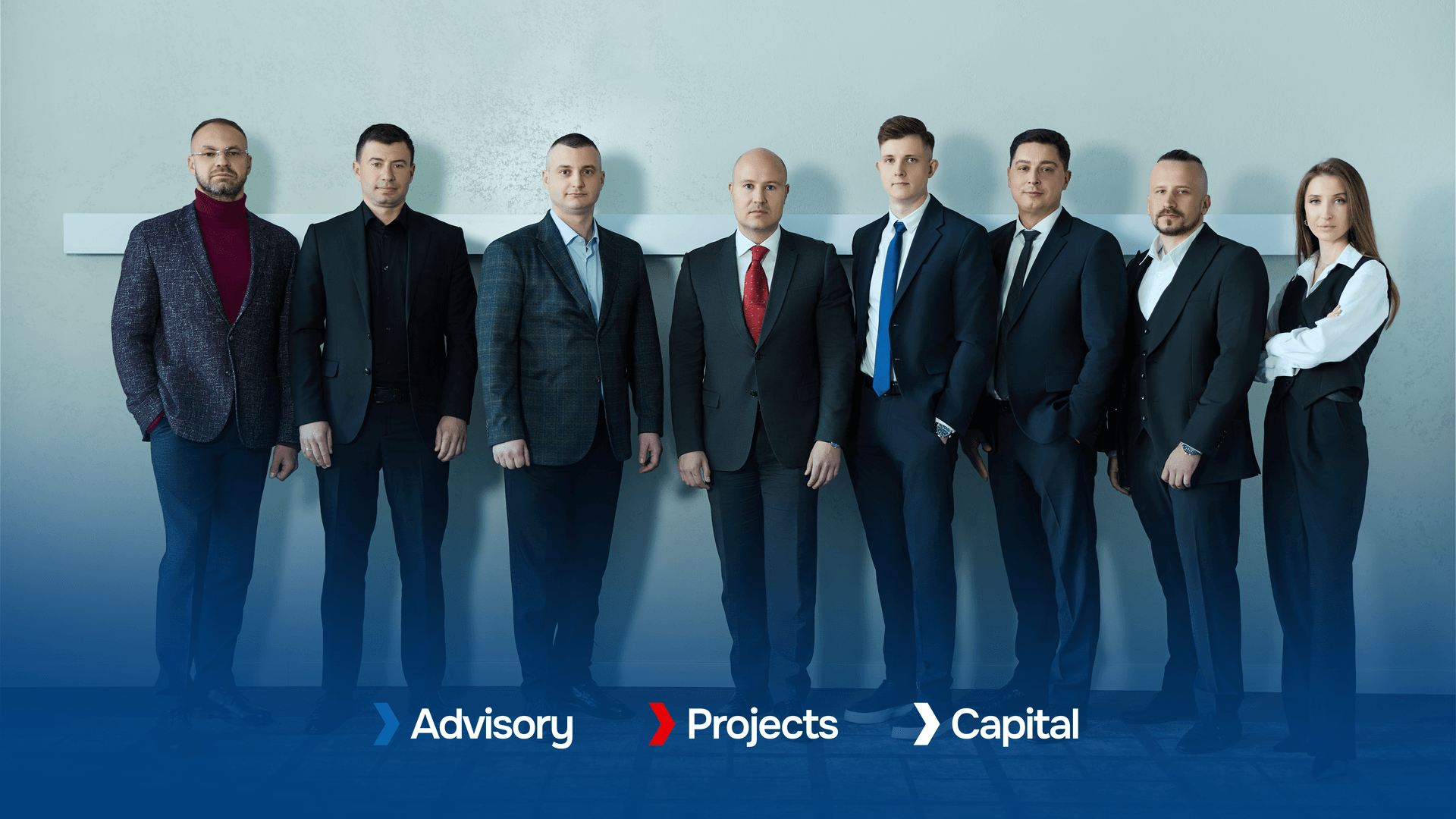
Andrii Okhotnikov, Managing Partner at POWERHOUSE, shares his team’s insight into Ukraine’s new investment cycle — one in which the binding constraint is no longer financing but the capacity to turn capital into completed industrial projects.
Reconstruction as the Largest Investment Cycle in Ukraine’s History
Ukraine is entering the largest investment cycle in its modern history. International financial institutions, partner governments, and private investors are assembling a massive pool of capital to rebuild the country.
According to the RDNA5 assessment, published by the World Bank and international partners in 2026, Ukraine’s reconstruction needs over the next decade total $588 billion — nearly three times the country’s 2025 GDP. The greatest needs are concentrated in energy, infrastructure, industry, and housing.
But it is precisely at this stage that reconstruction’s central paradox takes shape: access to capital is growing faster than the economy’s ability to deploy it effectively.
A New Kind of Constraint: Not Money, but the Execution Gap
It was long assumed that the main constraint on development was a shortage of financing. Today, that has changed. The critical bottleneck has become the execution gap — the gap between raising capital and converting it into working assets.
This is not simply a matter of construction or engineering. The problem runs deeper and is far more complex: it concerns managing the full life cycle of industrial projects, from raising investment through to bringing assets online. In effect, Ukraine’s reconstruction is becoming a task of building an entirely new system for delivering investment projects. If the past decade was about learning to attract capital, the next will be defined by the ability to scale management competencies. That capability is set to become the new precondition for economic development.
Energy as a Mirror of the Entire Industrial Economy
This gap is most visible in the energy sector. Ukraine is running three processes simultaneously: restoring destroyed generation capacity, modernizing aging infrastructure, and integrating into the European energy market.
That means every energy project is not a standalone investment but a multi-layered program of projects. Comparable complexity is found across other sectors too — infrastructure, industry, logistics.
What unites them is a shared set of traits: dozens of parallel processes, hundreds of stakeholders, and a high level of uncertainty. Under these conditions, classic project management is limited and is no longer sufficient on its own.
Why Industrial Projects Fail to Get Built
Global practice shows that most delays and failures in infrastructure projects don’t originate at the construction stage. The real bottlenecks come earlier: permitting and regulatory approvals, land issues and access to resources, conflicts with local communities, environmental and ESG requirements, and the absence of systematic stakeholder management.
As a result, up to 70% of a major industrial project’s critical path falls within the pre-construction phase. This is where a project’s potential to be delivered is either built — or lost.
A Shift in the Global Conversation: From Capital to Project Readiness
The international conversation around Ukraine’s reconstruction has undergone a fundamental shift.
Where the key question used to be raising financing, today it’s something else entirely: are projects sufficiently prepared for delivery? Investors no longer evaluate the financial model alone. They assess the project’s institutional structure, overall management quality, project risk management, the team’s ability to deliver execution, and the alignment of stakeholder interests.
For investors and lenders, de-risking a project matters enormously. The goal is to bring risk down to a level acceptable for financing — and this isn’t just about financial risk but regulatory, security, social, and structural risk as well. Classic instruments — guarantees, insurance, blended finance — mostly just transfer risk to another party. What’s needed now is deeper expertise: eliminating risk at its source through the quality of preparation, management, and stakeholder engagement. Preparing lower-risk projects has become a precondition for successfully raising private capital — and it substantially determines its cost.

Andrii Okhotnikov, Managing Partner at POWERHOUSE
Competition is shifting: from a contest for capital to a contest for reputation and trust. Investors are no longer choosing just a project — they’re choosing a team capable of seeing it through to results.
Andrii Okhotnikov, Managing Partner at POWERHOUSE
Stakeholders as the Hidden Element of the Execution Gap
In complex industrial projects, stakeholders are no longer an external factor. They have become part of the project’s operating system:
INSERT INFOGRAPHIC:
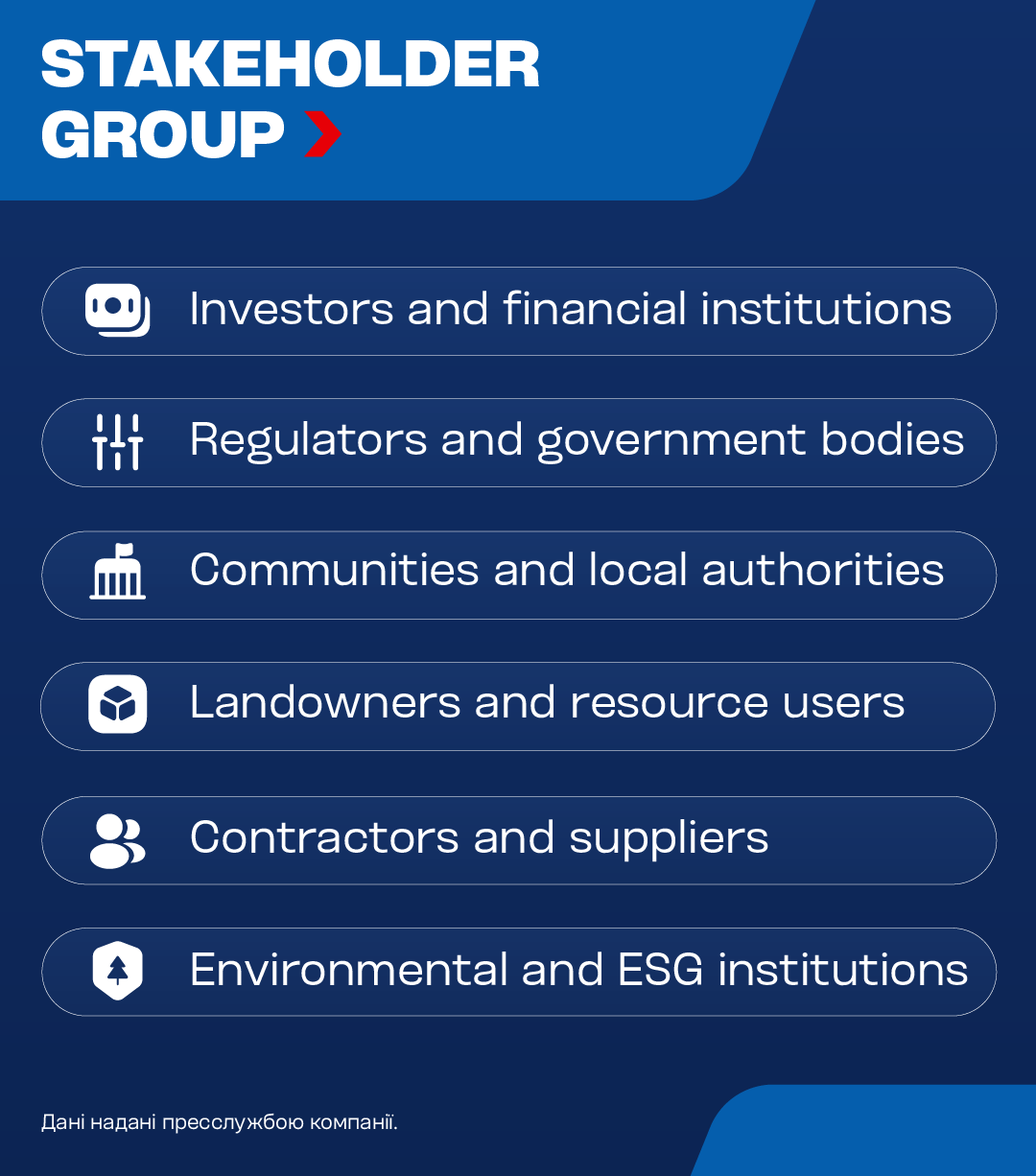
Infographic «Stakeholder group»
Each has its own interests, its own decision-making logic, and its own influence on a project’s timeline, budget, and risk. Project complexity scales with the number of stakeholders involved — a dynamic especially visible in oil and gas development, wind and solar generation, and mineral exploration and extraction.
Stakeholder management is evolving from a communications function into a core element of project management — and a driver of both investment appeal and bankability.
The Rise of a New Kind of Partner: POWERHOUSE’s Experience
The conventional model for industrial projects splits responsibilities cleanly: investor, advisor, engineering firm, contractor. Each covers its own piece — but no one owns the outcome from concept to launch. Gaps open up at the seams between participants, and it’s there, not within any single workstream, that projects most often lose control. A new function has emerged to close that gap: the operating partner for industrial projects. This is neither a consultant nor a contractor — it is a full-cycle delivery integrator:
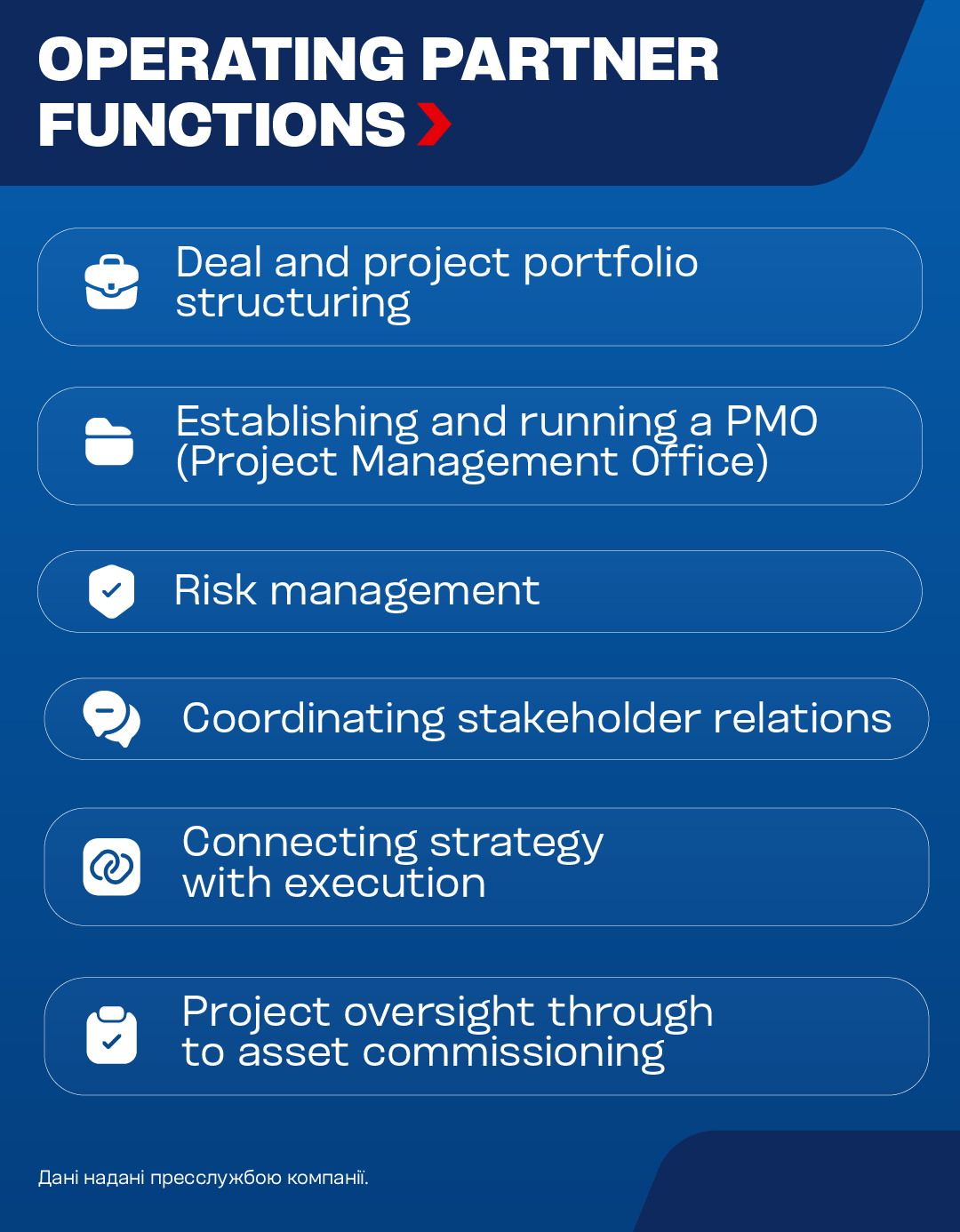
Infographic «Operating partner functions»
This, in effect, is how the delivery infrastructure for complex industrial projects — and the management capacity for industrial reconstruction at national scale — is being built.

The Company profile:
POWERHOUSE is a strategic and operating partner for businesses, investors, and complex industrial projects.
- The company delivers the full cycle of industrial investment execution — from strategy formation and investment structuring through project delivery and asset commissioning — across energy, oil and gas, mining, and industrial manufacturing.
- Managing Partner: Andrii Okhotnikov. Over 10 years in strategic and operational management of major Ukrainian industrial systems, energy assets, investment programs, and transformation projects.
- Team track record: more than 250 industrial projects delivered, with a combined portfolio value of roughly $1 billion across 12 regions of Ukraine (company data). The team has overseen production systems employing a total of roughly 10,000 workers.
Trust and reputational capital build up slowly in this market, and our team at Powerhouse earned ours from inside Ukraine’s largest industrial enterprises — building relationships with communities, landowners, regulators, and government bodies across most of the country’s regions, including under wartime conditions and in de-occupied territories. That work left us with established processes, tested communication channels, and a reserve of trust that now works for projects across Ukraine.

Our hands-on experience confirms just how much systematic stakeholder management matters. One example: projects financed by the EBRD and the EIB, where we built out stakeholder relationship systems across 12 regions of Ukraine for hydrocarbon extraction and transportation projects.
We’ve seen firsthand that a well-built stakeholder engagement system is increasingly becoming a precondition for a project’s investment readiness. That collaboration also laid the groundwork for developing and rolling out corporate social responsibility frameworks at the industrial companies we’ve worked with. The distinctive operating conditions these enterprises face demand that project teams and their management approaches adapt accordingly. We’ve rethought, refined, and built new approaches to organizing project work and running PMOs under conditions of high uncertainty and active hostilities in operating areas — including projects in Ukraine’s northern and eastern regions.
We’ve delivered transformations of some of the largest assets in the oil and gas sector, executed record-setting production programs, and reconstructed critical infrastructure facilities. Delivering industrial projects systematically under critical conditions pushed our management approaches to adapt further, and the successful commissioning of new and reconstructed assets confirmed that this management approach works.
These approaches are now widely applied across the team’s new projects — wind and solar generation development, resource base expansion for extraction companies, new industrial capacity construction, and infrastructure development. This adds up to more than experience — it builds operational capacity to manage complex systems and projects. In this model, POWERHOUSE covers the full life cycle of business decisions — from shaping the concept and structuring the project portfolio through to delivery, asset launch, and the creation of measurable economic value. Ukraine’s reconstruction will be the greatest management test in its modern history.
Over the next decade, the country’s competitiveness will be defined not by the volume of capital raised, but by the system’s ability to convert that capital into completed industrial projects.
The key constraint on development is no longer financing. The key constraint is management capacity — the ability to see projects through to results.
And it is precisely this gap between capital and execution that will determine the pace of Ukraine’s economic recovery and its position in Europe’s new industrial economy.