Today, business is rapidly globalizing, and entrepreneurs entering international markets increasingly operate without being tied to a single country. Alongside this, there is a growing need for financial infrastructure capable of ensuring fast, secure transactions across different jurisdictions.
Traditional European banks, with their restrictions and bureaucracy, often fail to meet the needs of international business. This is the niche where fintech companies and innovators step in, shaping a new architecture for global finance.
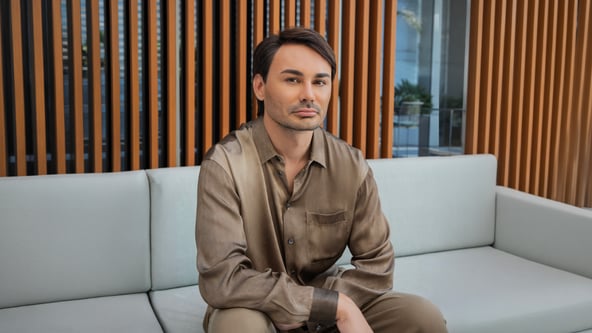
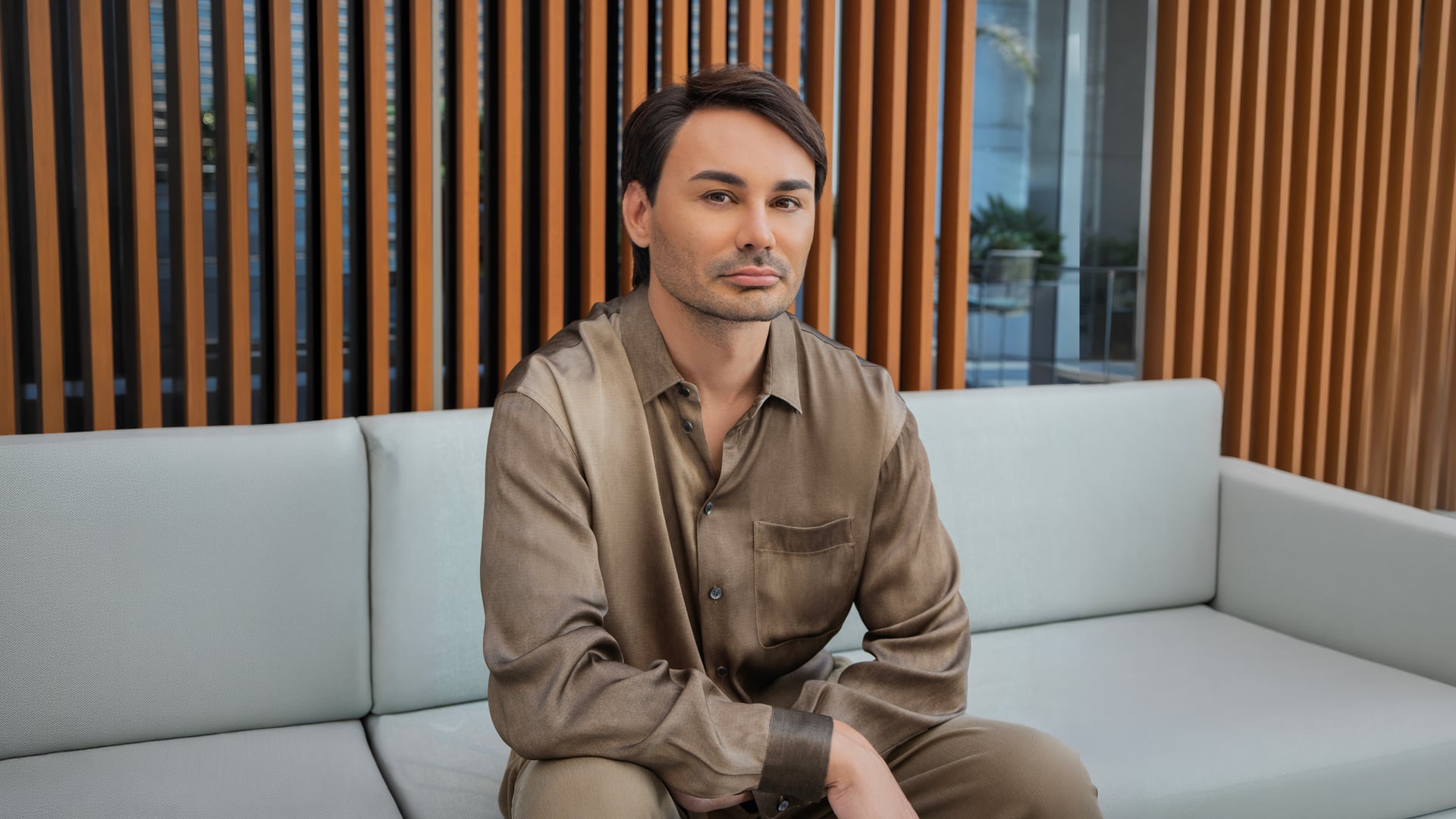
Among them is Vladyslav Zaporozhchenko — formerly an independent member of the supervisory board at IBOX Bank and a top executive at INDUSTRIAL BANK and CAMBIO BANK, and today the founder and CEO of the financial ecosystem Qiuntex. In an interview with Forbes BrandVoice, Vladyslav Zaporozhchenko discussed international financial markets, the role of cryptocurrency in global settlements, and the transformation of financial infrastructure.
Banking runs in the family
How did your career begin, and how did it develop?
I grew up in a family of bankers (my mother still works at the National Bank of Ukraine), so banking has interested me since I was young.
While still at university, I started working at a Ukrainian bank as an economist in the credit department. Later, I moved to the treasury and foreign exchange department and eventually focused on corporate lending. One of my first major achievements was arranging financing for companies ahead of Euro 2012. In particular, I oversaw the financing of a project to reconstruct the railway station in Donetsk.
In 2014, I moved to Kyiv and continued building my career in leadership roles — overseeing strategic initiatives and working with large-scale financial instruments, collaborating with the National Bank of Ukraine and the government. I was also involved in developing the banking and financial sector — in 2020, for instance, I helped draft legislation on virtual assets.
At 24, I became a shareholder and chairman of the supervisory board of CAMBIO BANK — at the time, the youngest chairman in Ukraineʼs banking sector.
For me, that was an important marker of professional growth and confirmation that a systematic approach to development delivers tangible results.
How easy was that path, given that not everyone manages to reach such career heights by 24?
On the one hand, I genuinely had it easier starting out. I knew the regulatory framework well, since Iʼd essentially grown up in the professional environment. Of course, hard work also played its part. What you might call the ʼups and downsʼ allowed me to grow horizontally.
Still, there was another side to it. Because of my age, I wasnʼt always taken seriously, which created an additional barrier to working with colleagues and clients. So I had to prove my competence almost daily — not with words, but with actions.
What prompted you to leave a successful banking career and start working on a startup?
It was a combination of circumstances and an inner sense that it was time to move on. In 2018, Ukraineʼs banking system was going through a difficult period: there were many restrictions and heavy regulation, and opportunities to launch new products were increasingly limited.
At some point, I realized that it was difficult to bring new financial service ideas to life under those conditions. At the same time, I felt ready to build something of my own. Back then, I was closely following the development of the fintech sector in Europe, attending international conferences, and watching how, after 2007, neobanks began rapidly transforming the banking industry.
So I shifted my focus to developing my own fintech solutions and launched my first project — a payment system in the Czech Republic.

Vladyslav Zaporozhchenko, founder and CEO of the financial ecosystem Qiuntex.
Why did you choose that particular country to launch it?
At the time, Ukraine didnʼt have the regulatory framework needed to build fully fledged payment systems or neobanks. The regulatory burden was too heavy, and the available toolkit too limited. In fact, little has changed on that front since then: in my view, Ukraine still remains a country where itʼs impossible to build an independent neobank.
Thatʼs why we deliberately chose the Czech Republic as our launch jurisdiction — it already had a clear legal framework and room to develop fintech products.
Over three years, we grew the project to a point where it attracted investor interest, and we ultimately sold it to a company from Indonesia (the product is still running today). That experience became the foundation for the next stage.
In 2021, I founded Qiuntex — a project focused on the corporate segment, an area where I had deep expertise and a solid understanding of real market needs.
At the Center of Financial Operations
What key pain points for entrepreneurs does Qiuntex solve?
The main challenge facing non-EU-resident entrepreneurs is gaining access to international banking infrastructure. Opening accounts, accessing payment systems, and conducting foreign currency transactions can be time-consuming and involve significant bureaucratic hurdles.
Qiuntex solves this problem — it allows both large corporate clients and small and medium-sized businesses to quickly open multi-currency accounts.
We also provide access to global payment infrastructure — systems such as SWIFT, CHAPS, SEPA and others. That means our clients can carry out international transactions just as easily as local ones.
Which jurisdictions exactly are we talking about?
Itʼs worth noting that we donʼt provide services in Ukraine. Today, our operations span more than 30 countries, including European markets, the UK, and Canada, with Japan soon to join the list.
As of April 2026, we serve around 2,500 companies, and that number continues to grow. We donʼt provide services in Ukraine, but Ukrainian entrepreneurs based abroad can become Qiuntex clients.
What other services do you offer besides basic payment infrastructure?
We offer solutions for mass payouts — salaries, for example — paid directly to cards, which are significantly faster and more efficient than traditional banking approaches, where payments run through accounts. This allows businesses to substantially cut operational time. Today, only a limited number of neobanks offer such services, while traditional banks are barely active in this segment at all.
A separate line of business is our White Label solutions in a banking-as-a-service format. We help companies and startups quickly enter the financial market by building them a turnkey neobank of their own — with custom design, branded cards, and full integration into the financial infrastructure.
Overall, Qiuntex is an ecosystem of services that brings together payment institutions (Qiuntex Bank), investment funds (Qiuntex Fund), and companies holding the relevant licenses across various jurisdictions.
Are you considering entering the Ukrainian market?
Thatʼs a complex process that requires deep engagement with the regulator and consideration of a number of structural factors. In 2025, we looked at a potential deal to acquire a Ukrainian state-owned bank, but it hasnʼt materialized so far. Even so, we remain interested in the Ukrainian market as a promising direction.
You recently obtained a license in Switzerland. Whatʼs the strategic goal behind that move?
The Swiss jurisdiction specifically allows us to launch crypto card operations and fully integrate cryptocurrency transactions. Switzerland is currently one of the few crypto-friendly jurisdictions in Europe (outside the European continent, Canada is another jurisdiction attractive to crypto businesses).
Within our Swiss division, clients will have access to both classic banking services — opening accounts, issuing payment cards — as well as digital asset operations, including the exchange of fiat funds for cryptocurrency.
How quickly did you obtain this license, and who helped you through the process?
Getting a single license usually takes five to six months. We obtain all the necessary licenses through my other project — International Fintech Business (IFB), which I founded in 2022 together with my partner Yuliia Raubishko.
IFB, a consulting firm, specializes in legal consulting on financial licensing, regulatory support, and the implementation of innovative financial technologies.
Among other things, we work on licensing and selling ready-made financial institutions, integrating with international payment systems, and developing and implementing automated banking systems. Today, IFB operates in 103 countries, providing end-to-end support for fintech industry projects on an international scale.
The Digital Euro and Crypto Loans as the New Reality
What key trends will shape the financial market over the next three to five years?
- The first trend is the rapid growth of crypto lending — providing loans secured by crypto assets. This is a response to genuine market demand: clients do not want to move their assets out of the crypto ecosystem and into the traditional banking system. Instead, they want to use them as a liquid financial instrument.
- The second trend is the rapid digitization of finance. In Europe, preparations are underway for the launch of the digital euro, while major banks are also working on their own stablecoins. Even global payment systems are already testing and rolling out blockchain-based solutions to increase the speed and security of transactions. The regulatory framework for the digital euro is now nearly complete, and pilot projects are being tested. I think that in the coming years, we’ll see the first practical use cases emerge at the country level. But full-scale adoption is still several years away — it’s not just about the technology, but also about how quickly markets, users, and regulators adapt.
- The third — banking processes will become fully automated: AI will be able to pay bills on its own at the most favorable rates and warn about potential cash-flow gaps. Banking services will turn into an ʼinvisible function,ʼ with all payments integrated directly into messenger interfaces, online stores, or smart devices. And neobanks will become ʼfinancial hubs,ʼ where a single app lets you manage accounts across different banks, investments, and even medical or insurance data.
In addition, services once available only to Private Banking clients — such as access to venture investments — will become mainstream.

Vladyslav Zaporozhchenko, founder and CEO of the financial ecosystem Qiuntex.
When might these changes go mainstream in Europe and Ukraine?
For Ukraine, these processes will likely lag somewhat, but given the countryʼs high level of digitalization, adoption could happen fairly quickly after the EU launch.
How do you see Qiuntexʼs future development?
We are considering several strategic scenarios. Looking ahead, we do not rule out going public and attracting external investors, but for now, our main focus is scaling the business and expanding geographically. In particular, we are finalizing the process of obtaining a license in Japan and preparing to apply for a license in the United States. This will allow us to further strengthen our global presence and expand the opportunities we can offer clients doing business internationally.
License Information
Qiuntex Pay Sp. z o.o. is regulated by the Polish Financial Supervisory Commission (KNF) with permission to provide regulated products and services. License number MIP145/2022 Office address: str. Hoza 86/ 410, 00-682 Warsaw Poland SWIFT/BIC: QPAYPLP2XXX
QIUNTEXBANK TECHNOLOGY (UK) LTD is registered as a Foreign Money Services Business (ʼFMSBʼ) with the Financial Transactions and Reports Analysis Centre (ʼFINTRACʼ) (Reg. No.: M21261953).
QIUNTEXBANK TECHNOLOGY LTD is registered with the Central Bank of Canada as a Payment service provider applicant under the Retail Payment Activities Act.
Zenvault GmbH is a registered financial intermediary supervised by VQF (Verein zur Qualitätssicherung von Finanzdienstleistungen), a Self-Regulatory Organisation (SRO) officially recognised by the Swiss Financial Market Supervisory Authority (FINMA).