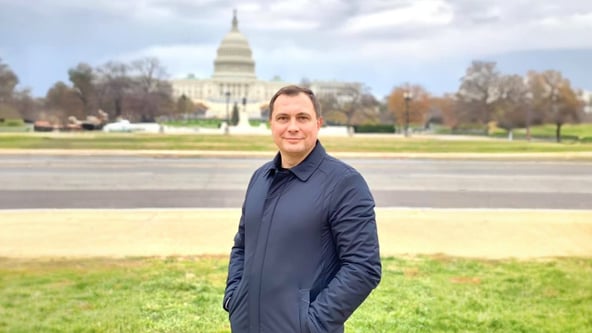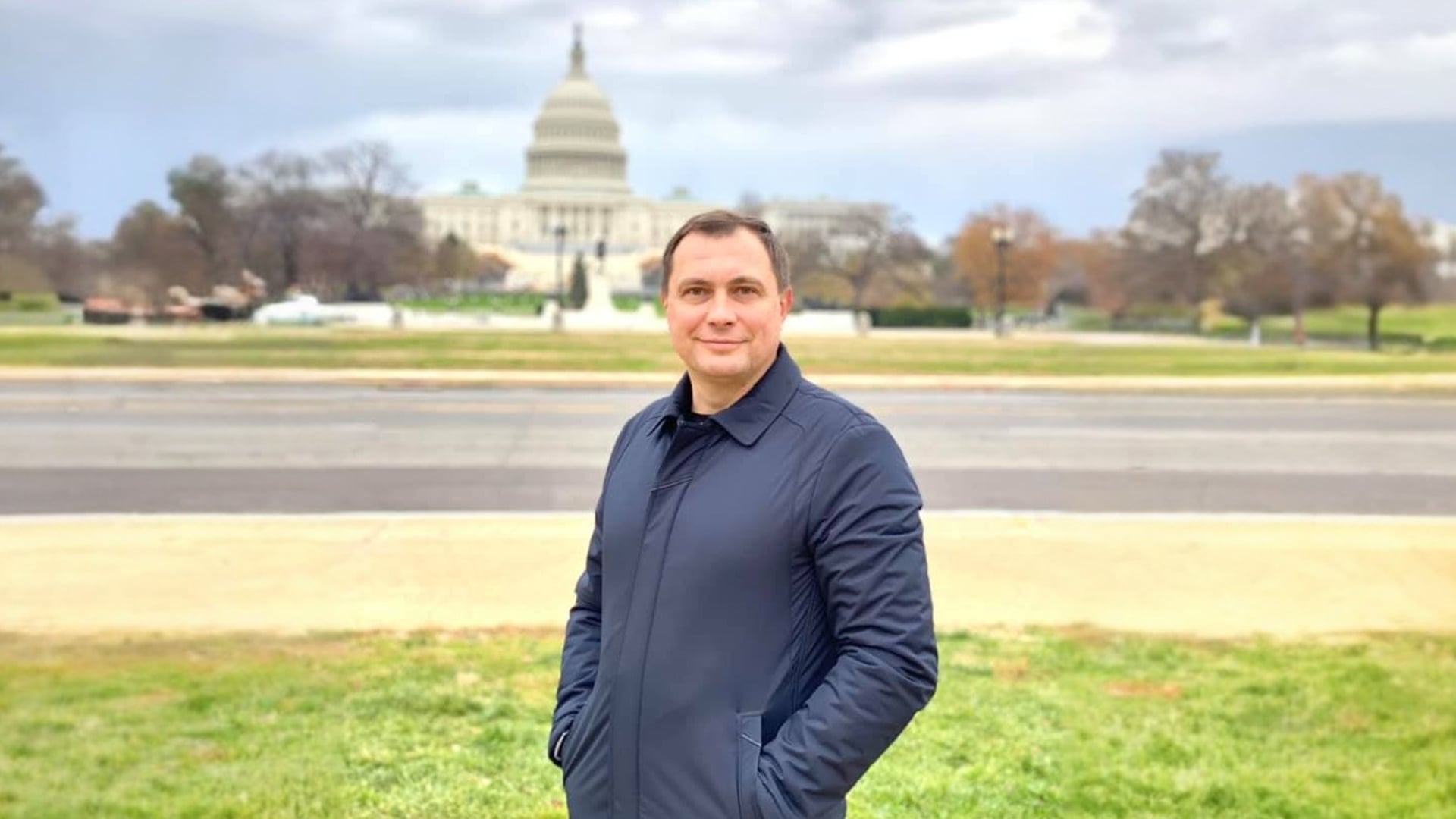
Over the past eight years, the Federation of Employers of the Oil and Gas Industry has built a consistent and strategic presence for Ukraine on the global energy map – from advocating for sanctions against the Nord Stream 2 to helping secure billions of dollars in support for the country.
Why does industry-wide advocacy prove more effective than corporate lobbying? And what risks arise when there is no unified position within the country? These are the key questions addressed by Vitalii Shcherbenko, Chairman of the Presidium of the Federation of Employers of the Oil and Gas Industry.
You have repeatedly emphasized that industry advocacy is a tool of economic diplomacy. Why is this model particularly effective for Ukraine?
In Ukraine, the term ʼlobbyingʼ often carries negative connotations, associated with backroom deals and corruption. However, in mature democracies, lobbying is a transparent and legitimate part of the decision-making process. In this context, industry associations and public organizations play a crucial role – particularly in advancing national interests in a global environment.
Why is it a tool of economic diplomacy? Because it enables the transformation of industry – and, more broadly, national – interests into political decisions at the international level, ranging from sanctions to investment flows.
When did you first see this in practice?
After my first visit to Washington, D.C. in 2018. It became clear then that the chosen strategy was working. During meetings, including those with Naftogaz representatives, I could see how U.S. congressmen, policymakers, and the media perceived the presence of an industry association. The level of trust was notably high.
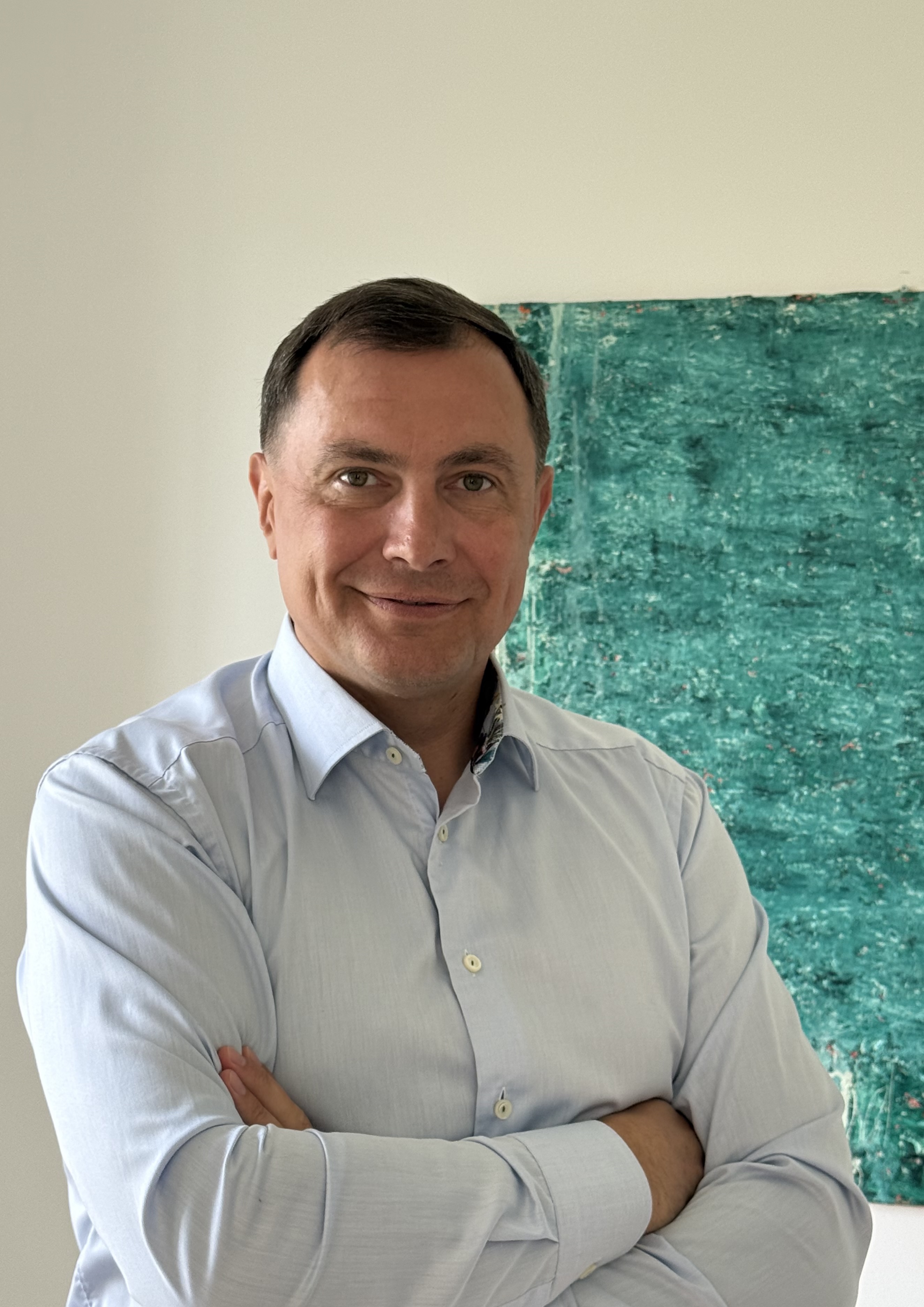
Vitalii Shcherbenko, chairman of the Presidium of the Federation of Employers of the Oil and Gas Industry
Why do international partners prefer working through industry associations rather than directly with individual companies, and how does this affect effectiveness?
Because it ultimately comes down to a balance of interests and trust. We do not promote the agenda of a single company – we represent the position of the entire industry. That is a fundamentally different logic.
Our goal is twofold: to advance the interests of oil and gas enterprises while also supporting Ukraine’s integration into the European energy market, fostering cooperation with American companies, and ensuring sustained international support for Ukraine. In this sense, the Federation operates at the intersection of industry business interests and public policy.
One of the most high-profile cases was the opposition to Nord Stream 2. What role did the Federation play?
I recall working alongside colleagues from Naftogaz to explain to American policymakers the risks posed by Russia’s bypass gas pipeline, Nord Stream 2, and to make the case that it represented a direct threat to Ukraine. Our goal – to stop its construction – seemed unrealistic to many. At the time, the chances of passing a sanctions bill were estimated at around 1%.
Despite this, we continued our efforts together with Daniel Vajdich and Yorktown Solutions, which helped develop the sanctions framework and guide it through the complex legislative process in the U.S. Congress. We succeeded in introducing the bill, moving it through the relevant Senate and House committees, and securing bipartisan support.
Recognizing the low likelihood of passing a standalone bill, Yorktown facilitated the inclusion of sanctions provisions into the National Defense Authorization Act (NDAA), the annual U.S. defense budget. This required close coordination with leadership from both parties in both chambers and became a pivotal political achievement.
The sanctions included in the 2019 and 2020 NDAAs imposed penalties on companies involved in constructing Nord Stream 2, undermining its commercial viability. Following their introduction, the pipeline-laying contractor withdrew from the project, effectively halting construction.
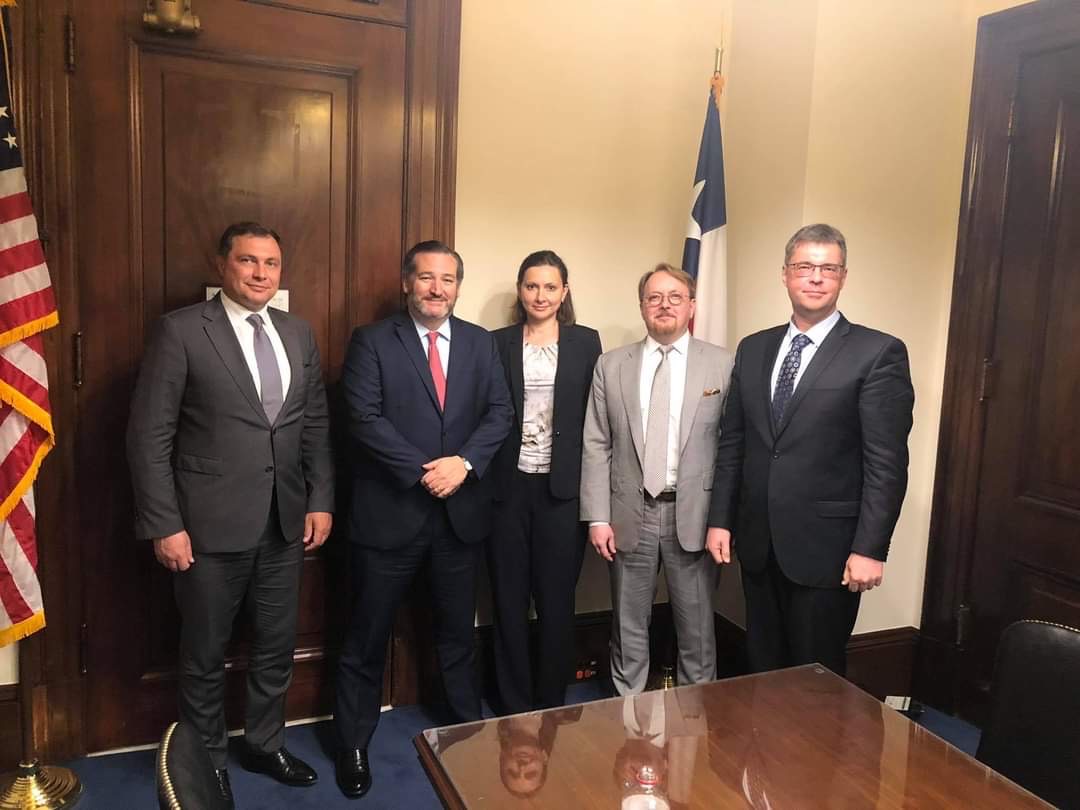
Meeting with Senator Ted Cruz. Washington, 2018.
The consequences for Russia were significant, while for Ukraine they proved transformative. Moscow was forced to return to negotiations with Naftogaz and sign a new gas transit agreement, preserving Ukraine’s role as a key route for supplies to Europe.
Under the 2019 agreement, Gazprom committed to minimum transit volumes of 65 billion cubic meters in 2020 and 40 billion annually through 2024. President Volodymyr Zelenskyy emphasized that the deal would secure approximately $7 billion in revenue for Ukraine. The sanctions also prevented Russia from bypassing Ukraine and limited its ability to expand direct gas leverage over Europe.
Has your cooperation with Yorktown Solutions continued?
We have been working together for eight years.
For Ukraine to be heard in Washington, D.C., it needs a consistent institutional presence.
The scale of Yorktown Solutions’ activity is telling: in a single year, the firm conducted more than 11,000 engagements with Congress, the State Department, the Department of Energy, the National Security Council, leading think tanks such as the Atlantic Council and the Heritage Foundation, as well as major media outlets. By comparison, the Saudi lobby-widely regarded as one of the largest foreign lobbying forces in Washington – reported fewer than 2,900 contacts over the same period.
Daniel Vajdich, who leads Yorktown, is a Republican national security expert. He worked in the U.S. Senate during the events of 2014 and was involved in drafting the first congressional sanctions against Russia, as well as authorizing military assistance to Ukraine, an experience he has since brought into the firm’s work. Yorktown’s effectiveness has been so notable that Russia imposed sanctions against it, making it the only lobbying firm in Washington subject to such restrictions.
Following the start of the full-scale invasion, the partnership evolved. The focus shifted to securing financing for the energy sector, engaging with international financial institutions, and facilitating imports of U.S. liquefied natural gas. Together with Yorktown and Naftogaz, commitments were secured from the Export-Import Bank of the United States totaling $300 million for the procurement of critical equipment to restore gas infrastructure, with a broader modernization program exceeding $1 billion also under discussion.
Yorktown also played a key role in the passage of the REPO for Ukrainians Act, signed on April 24, 2024, which enables the United States to confiscate frozen Russian sovereign assets and redirect them toward supporting Ukraine, including reconstruction and humanitarian aid.
How extensive is the Federation’s international activity beyond lobbying?
We work systematically to ensure Ukraine’s presence in the global energy dialogue. At the World Economic Forum Annual Meeting in Davos, for example, we organized an energy panel titled ʼUkraine as a Key Element in Building an Integrated European Gas Market.ʼ At the Global Petroleum Show in Calgary, we hosted ʼUkrainian Energy Day.ʼ
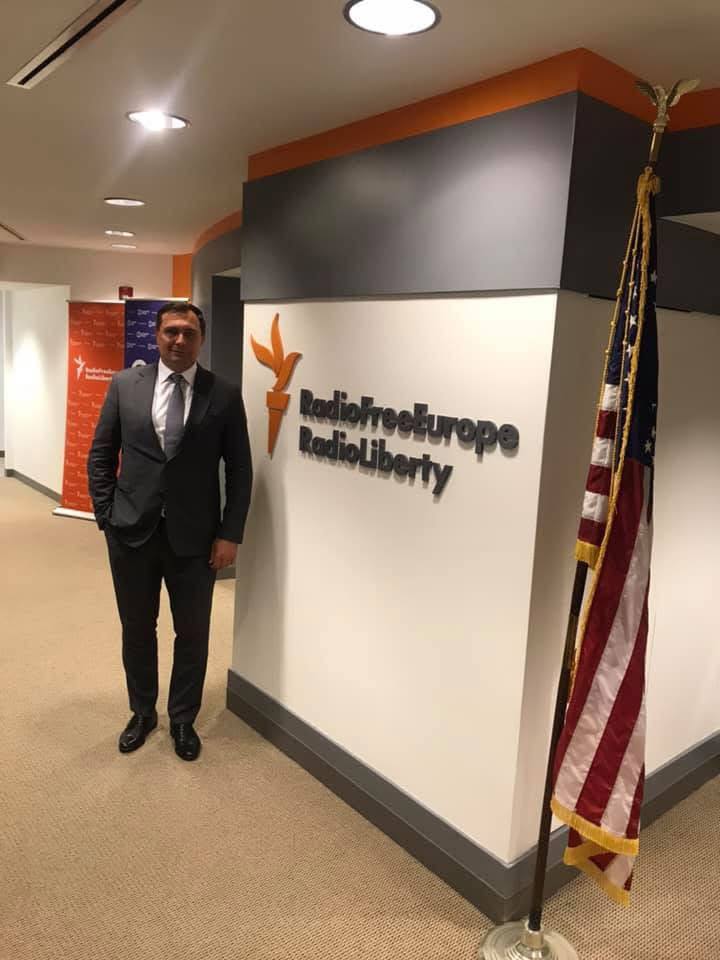
Radio “Liberty” (Svoboda) Washington, 2019
To improve perceptions of Ukraine in France and counter Russian propaganda in the EU, we partnered with stakeholders to organize visits for leading French journalists and opinion leaders to Ukraine, including to the Donbas region.
We also supported Ukraine’s presence at the United Nations Climate Change Conference COP29 in Baku, contributed to organizing events during the Ukraine Peace Summit in Switzerland, and facilitated support for Ukraine’s participation in Expo 2025 in Japan – particularly in the areas of renewable energy and investment in energy recovery.
In addition, we actively engage European think tanks, including FTI Consulting Belgium and Zentrum für die Liberale Moderne in Berlin, collaborate with global media, and are a member of the European Policy Centre. Together with these partners, we ensure that representatives of Ukraine’s oil and gas sector are fully integrated into international dialogue and discussions on issues critical to both the industry and the country.
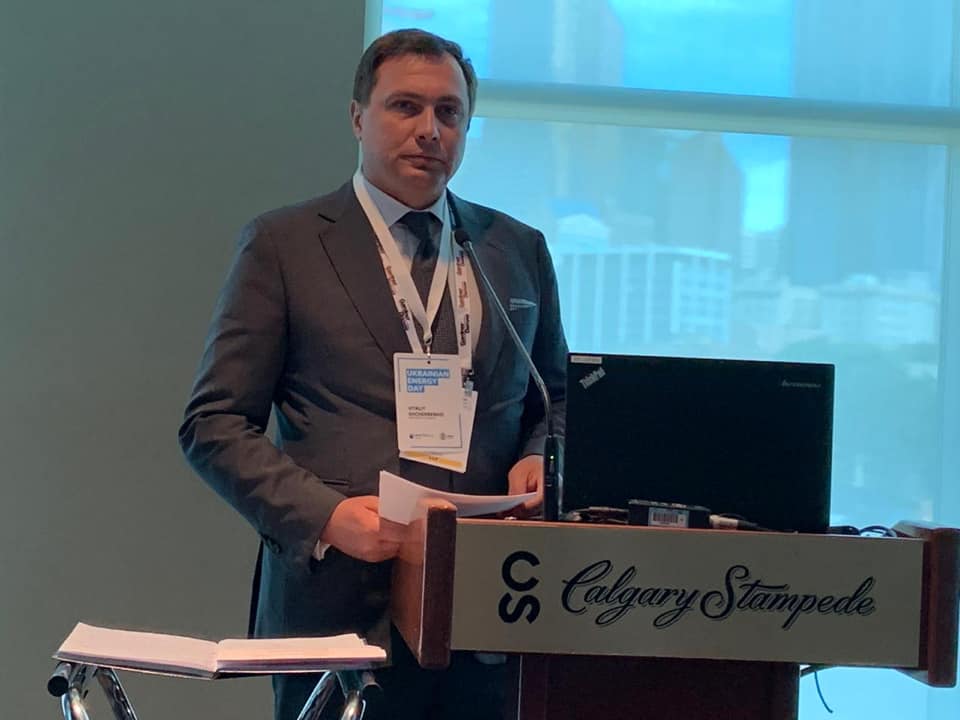
During a speech at Ukrainian Energy Day in Calgary (Canada).
How ready is Ukrainian business today to act collectively?
For many years, we have been cooperating with the largest companies in the oil and gas sector, including enterprises within the Naftogaz Group. From experience, I can say that our international partners are highly sensitive to signals of fragmentation. For them, it is primarily a question of predictability.
If we lack constructive dialogue, coordinated positions, and effective cooperation, our partners simply will not understand us. As a result, we will not be able to operate effectively at the international level or defend the interests of the industry, and of the country as a whole. These are risks we must avoid.
That is why I hope that we will continue to work with the business community and Naftogaz Group in a coordinated and systematic way going forward.
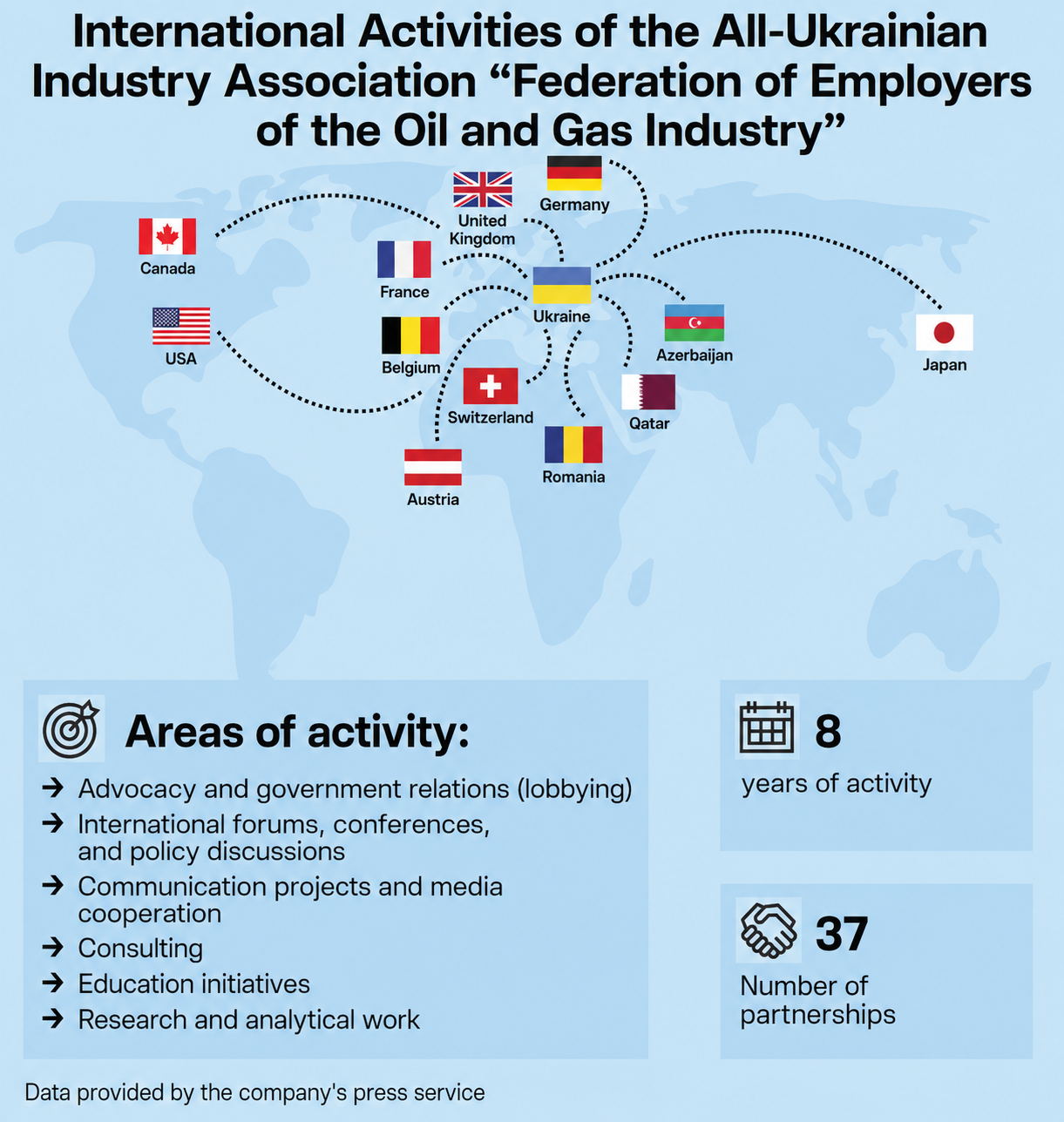
International Activities of the All-Ukrainian Industry Association “Federation of Employers of the Oil and Gas Industry”