
Ukraine is going through one of the largest-scale energy transitions in Europe. Cities are becoming energy islands: Slavutych, for example, is building its own generation capacity to keep the lights on even during prolonged blackouts. Meanwhile, businesses far removed from traditional energy are investing in alternative sources and energy storage, turning them from a tool of energy security into a new revenue stream.

Заощаджуйте, отримуючи 6 журналів за ціною 4
Купуйте річну передплату на шість журналів Forbes Ukraine за 1 799 грн замість 2 400 грн. Читайте головні історії українського бізнесу, ексклюзивні рейтинги та глибоку аналітику в кожному номері.
The scale of change shows in the numbers, too. According to the European association SolarPower Europe, in 2025 Ukraine entered Europe’s top five battery storage markets for the first time, installing almost 3 GWh of new capacity.
The economics of such projects depend on a company’s needs, how the system is used, and conditions on the energy market. So the key question for businesses is not only whether to invest in storage, but which model will deliver the best return.
How does Ukraine’s BESS market differ from the EU market, what opportunities does it open up, and what will shape its further development?
Forbes BrandVoice discussed this with Dominik Waligórski, Head of Sales at Polish company E-Hub Energy, an expert with 14 years of experience in renewable energy.

About the company
E-Hub Energy is a European manufacturer of integrated energy storage systems that combine batteries, power converters, control and safety systems.
The company offers a full cycle of services, from modelling a project’s economics to installation and maintenance. It is headquartered in Warsaw, with a factory in Legnica featuring robotic production lines equipped with industrial robots. The first phase has a design capacity of 1.2 GWh of systems per year.
*Data provided by the company’s press office
Different investment priorities
How does the role of storage systems differ between the Ukrainian and EU markets?
In Ukraine, storage primarily helps businesses keep operating. Outages mean halted production, lost stock, and the risk of unfulfilled contracts. So for a Ukrainian company, the key question is how to keep operating when the power goes down. At the same time, the system has to be designed for this specific task: operating during outages requires a configuration that supports island mode. Switchover time and backup duration depend on the site’s requirements and the system parameters.
In the EU, storage is more often seen as a tool for managing energy consumption. It helps companies make better use of their own solar or wind generation, shift consumption to cheaper hours, and provide grid services. As renewables spread, the need for flexibility grows — and storage can provide it.
What can the EU learn from Ukraine’s experience?
The war has shown that energy resilience must be built not only at the level of the national grid. Local solutions play an important role: combining generation, storage, and consumption management at the level of individual factories, hospitals, and communities. This approach helps critical facilities keep running even when the centralized power supply is disrupted.
What makes Ukraine’s experience valuable here is concrete solutions that have been tested under wartime conditions. They can serve as a practical benchmark for EU energy systems, which also need greater flexibility and resilience.
The storage market: Ukraine and the EU
- ~3 GWh — of new battery energy storage installed in Ukraine in 2025, putting the country in Europe’s top five markets for the first time (SolarPower Europe)
- 36 GWh — of new BESS installed in Europe in 2025 (+48%); total installed capacity exceeded 100 GWh for the first time (SolarPower Europe)
- 398 MW — of new energy storage installations added to Ukraine’s power system in 2025 (Ukrenergo)
*Based on open sources
Ukraine in E‑Hub’s strategy
Why has the Ukrainian market become one of the company’s priorities?
Ukraine is one of E‑Hub’s key markets. Two factors come together here: businesses need reliable power right now, and the country’s energy system is going through a fundamental transformation. So demand for storage is not a prospect for the distant future — it is a need that already exists.
Geographic proximity matters too: Ukrainian clients can visit our factory in Poland and see their system being built. Having production close by also makes delivery planning easier. For me personally, working with Ukrainian partners has a deeper meaning — through my work, I can support Ukrainians.
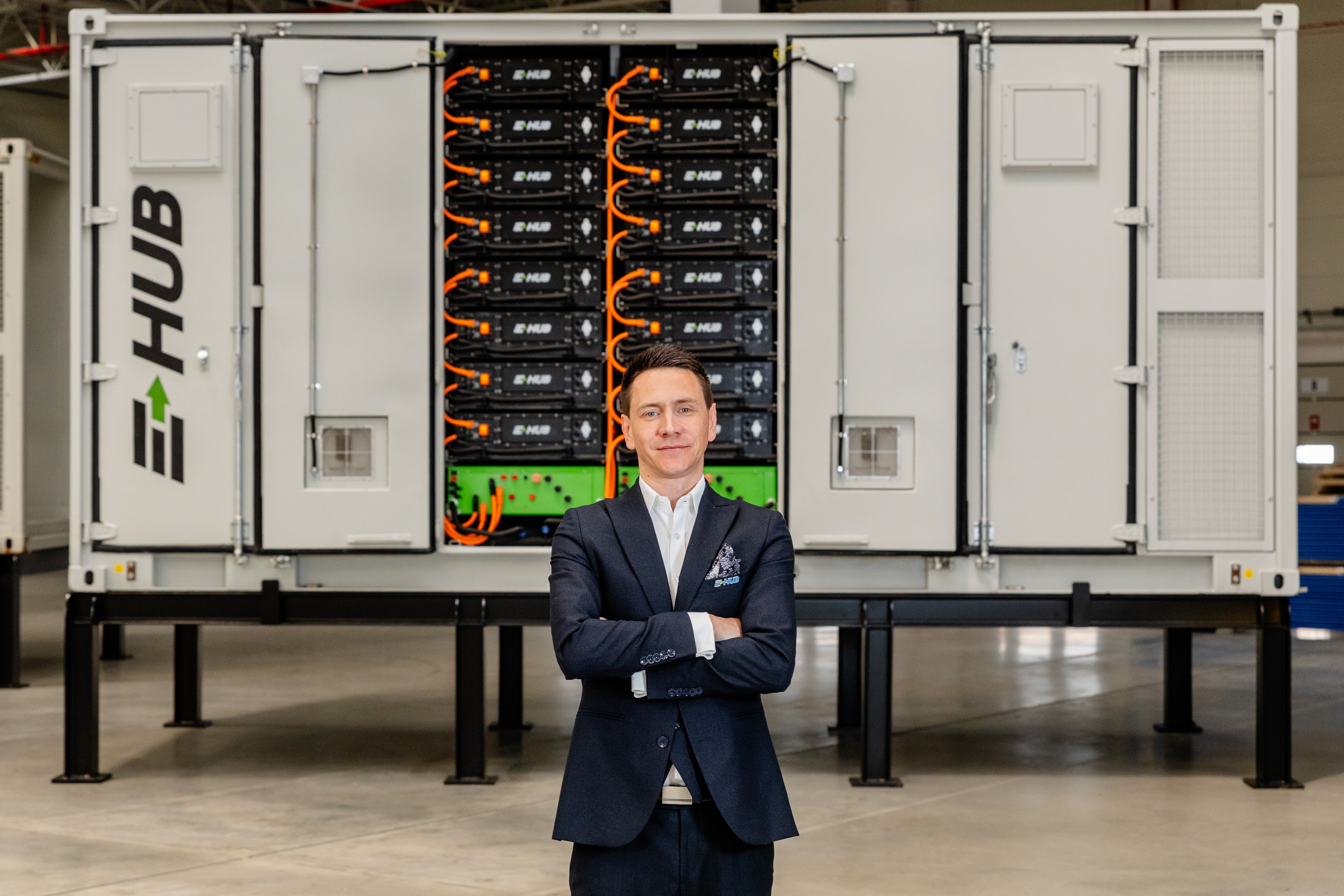
Dominik Waligórski, Head of Sales at Polish company E-Hub Energy. Photo by Eugene Zhyvchik
What business model have you chosen for Ukraine?
A manufacturer entering a new market usually has three options: sell through distributors, build its own local team, or join forces with local companies. We chose the third. The client gets direct access to the manufacturer, while the system is designed, installed and serviced by people who know Ukraine from the inside. We are responsible for the technology, integration and engineering support. The partner brings knowledge of the market, local infrastructure and procedures.
We don’t sell equipment off the shelf. First, we look at consumption data, grid connection conditions and investor expectations — and only then do we select a solution that will still perform years from now. From the first discussion through startup and service, we are there for the client.
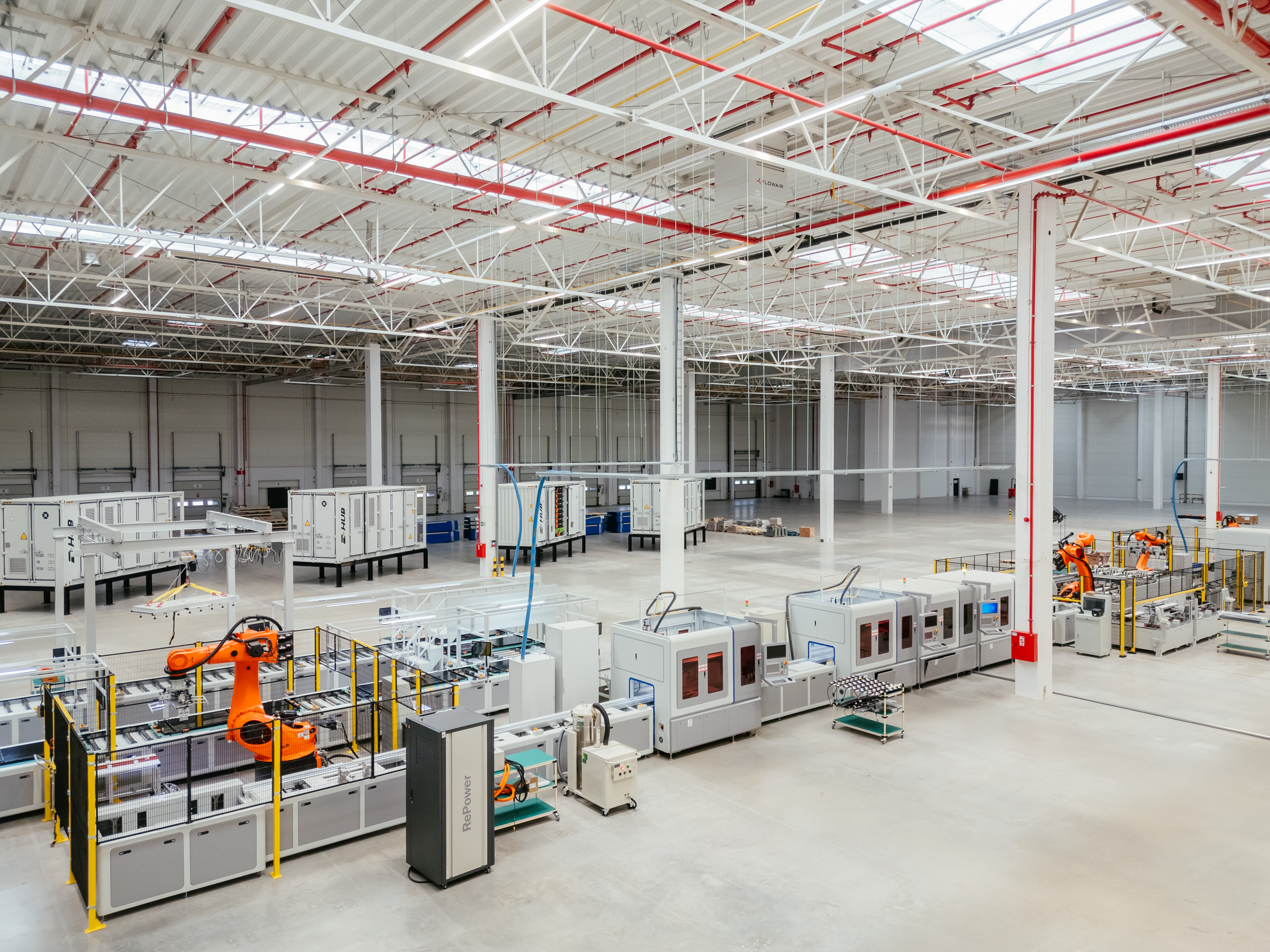
E-Hub Energy factory in Poland. Photo by Eugene Zhyvchik
Ukrainian businesses can choose between low-cost Asian equipment, global integrators and European manufacturers. Why should companies investing for years ahead look at Polish equipment in particular?
Because you work directly with a manufacturer that takes responsibility for the complete system. Our production starts at the cell level: using cell-to-pack technology, we build the packs and then integrate them with power converters, controls and safety systems. This gives us control of quality at every stage.
For the client, this means a single point of contact for all technical questions and service. The engineers who designed the equipment and know it inside out are close by. Our spare parts stock is in Legnica, near Wrocław, so the logistics chain is short.
How do the factory acceptance tests work, and what do they give the client?
Clients can meet the team that builds their system and take part in the testing. We check that the configuration matches the project and how communications, controls, and safety functions perform. Afterwards, the client receives a full set of documentation that meets the highest quality standards.
This way, we resolve issues before the equipment reaches Ukraine and reduce the risk of unexpected problems during installation.
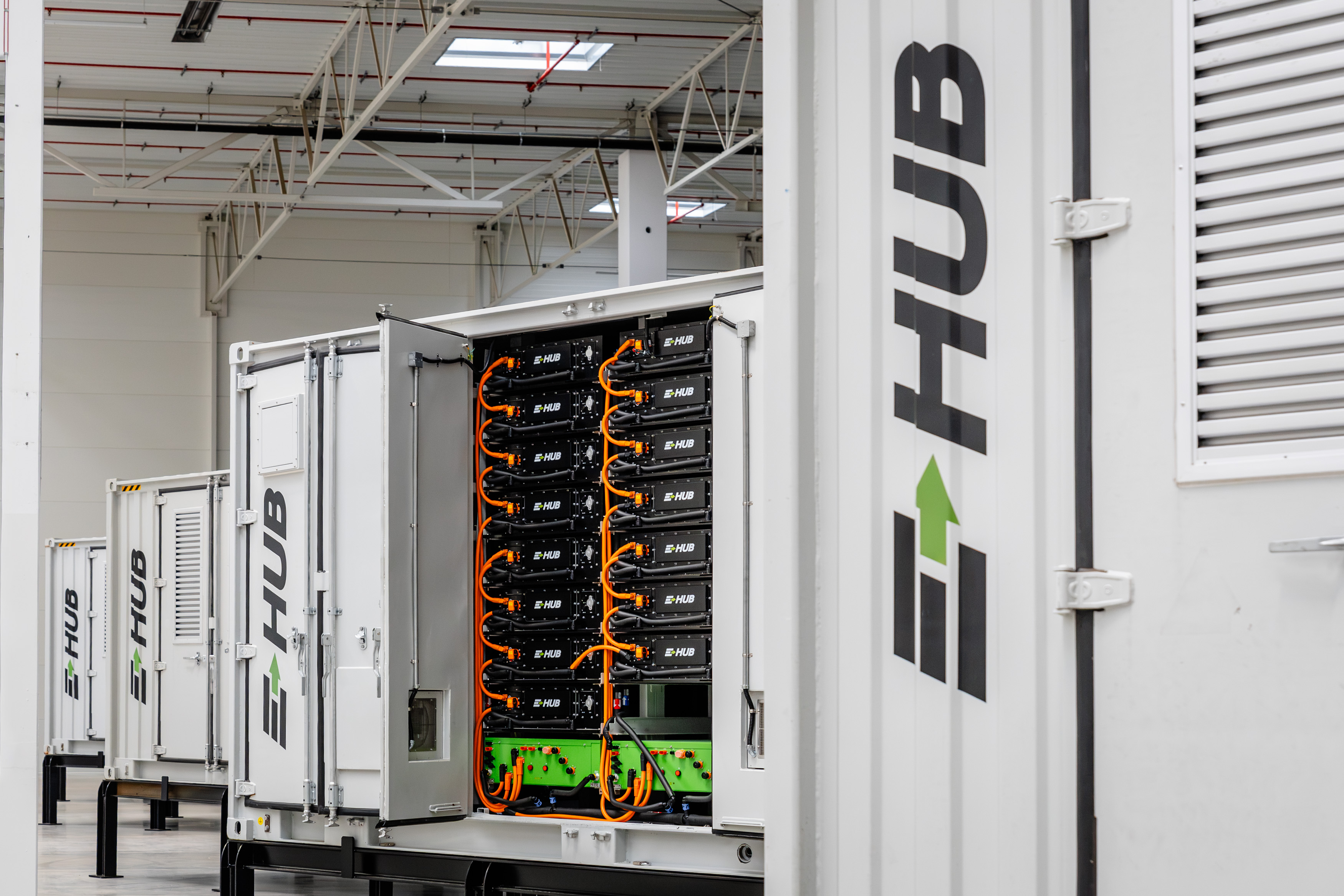
E-Hub Energy factory in Poland. Photo by Eugene Zhyvchik
What will it take for energy storage projects in Ukraine to work at scale?
The main challenge is making financing for energy storage projects available at an acceptable level of risk. Banks need projects with predictable economics, a clear cost and cash flows they can assess. Investors need clarity on grid connection requirements — and, in wartime, solutions for physical infrastructure protection and risk insurance as well. That is why warranty instruments and predictable market rules can matter as much as the purchase price of the equipment itself.
Do you plan to help shape a bank financing model for storage for Ukrainian businesses?
There is no way around it. We are already taking part in the dialogue with financial institutions. Banks need to assess not only the borrower, but also the systemʼs technical parameters, its potential economic impact and its risks. As a manufacturer, we can provide the necessary expertise, explaining how the equipment works and what determines the performance of the investment.
Ukraine already has financial support mechanisms in place. In particular, the European Bank for Reconstruction and Development (EBRD) runs the Energy Security Support Facility, which partially covers the risk of partner banks on loans for decentralized generation, energy storage, and energy efficiency.
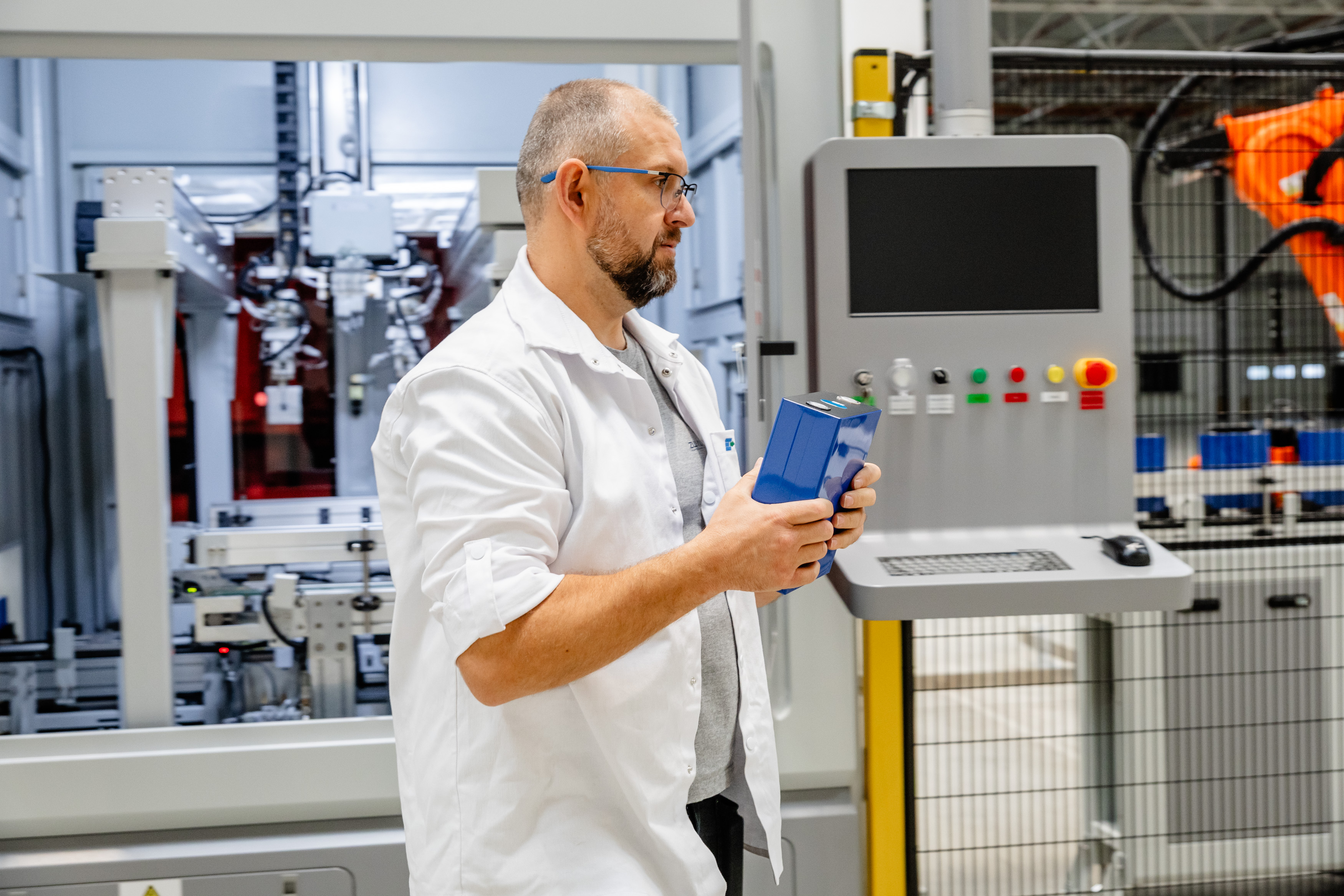
E-Hub Energy factory in Poland. Photo by Eugene Zhyvchik
From backup to energy asset
Where should a business start if it wants storage not only to save it during outages, but to work for it?
First of all, stop seeing storage merely as a backup in case of a blackout. An industrial energy storage system also helps balance the grid and makes the power supply more reliable. That is why most of our clients are industrial enterprises, developers, and engineering companies.
The size of the business is no barrier. The smallest system in our portfolio has 125 kW of power and 261 kWh of capacity. It can be installed even at a small production facility. Our largest projects reach 100–200 MWh.
Another promising area is pairing storage with a solar or wind plant. Energy generated during the day can then be stored and used later, when it is actually needed.
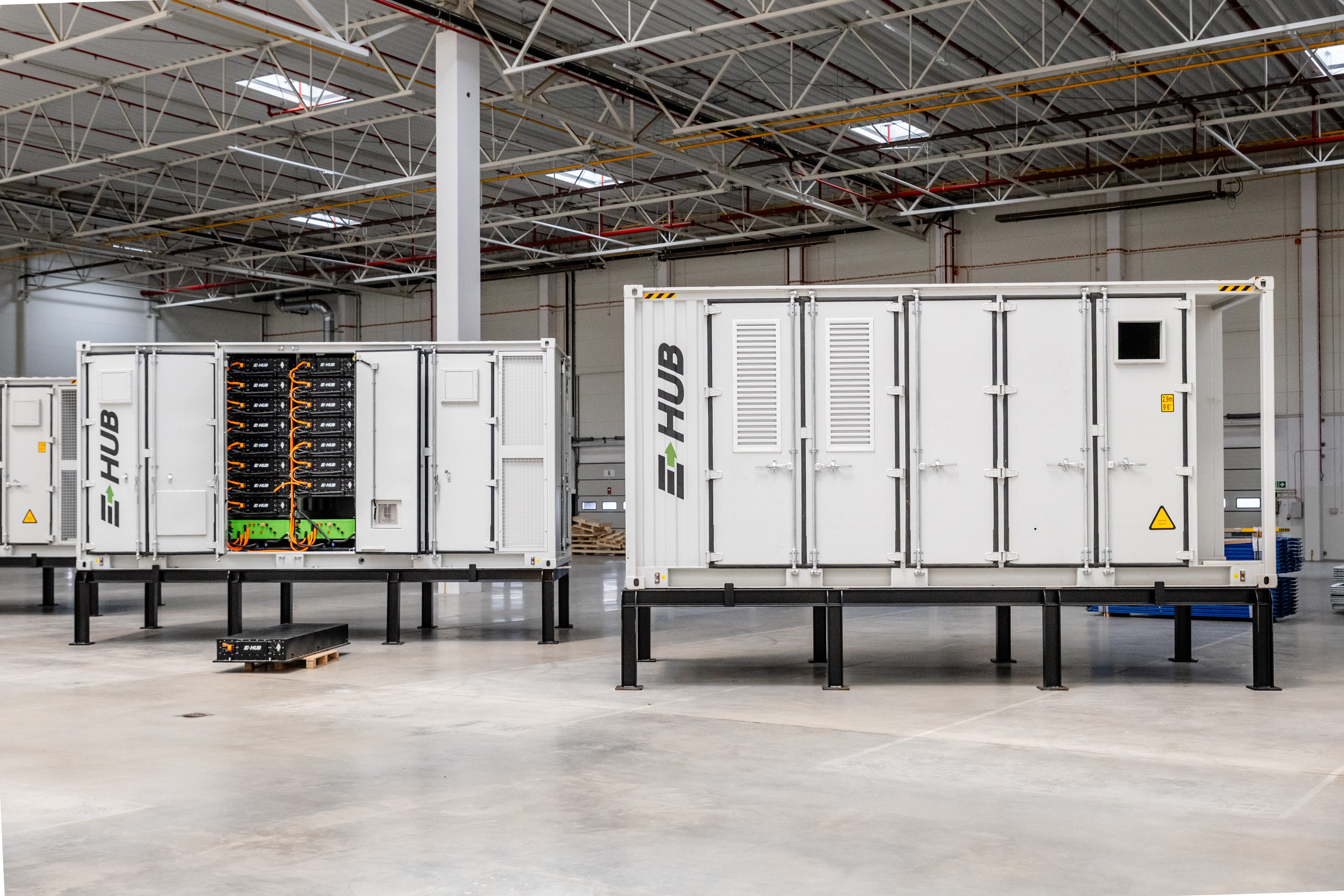
E-Hub Energy factory in Poland. Photo by Eugene Zhyvchik
How can a business choose the right system so that storage really pays off?
The starting point is the client’s objectives and how exactly the system will be used. A bigger battery alone does not guarantee a better financial outcome.
The economics need to be calculated in full: the cost of charging energy, losses during storage and discharge, the consumption of the cooling system, how fast the batteries degrade, and the cost of servicing, insurance, financing, and potential component replacements. On the other side of the scale are the losses a business avoids thanks to an uninterrupted power supply. That figure is different for every company.
Losses from downtime vary from company to company. If the system has to provide backup power and help optimize costs at the same time, part of its capacity will have to be held in reserve for emergencies. This limits the commercial use of the storage system, so this operating mode needs to be factored into the financial model.
Next comes the hardware. We use lithium iron phosphate batteries with liquid cooling, and our service covers remote monitoring, preventive maintenance, and operational optimization.
And don’t overlook the warranty. It must clearly define permitted operating conditions and the capacity the battery is guaranteed to retain.
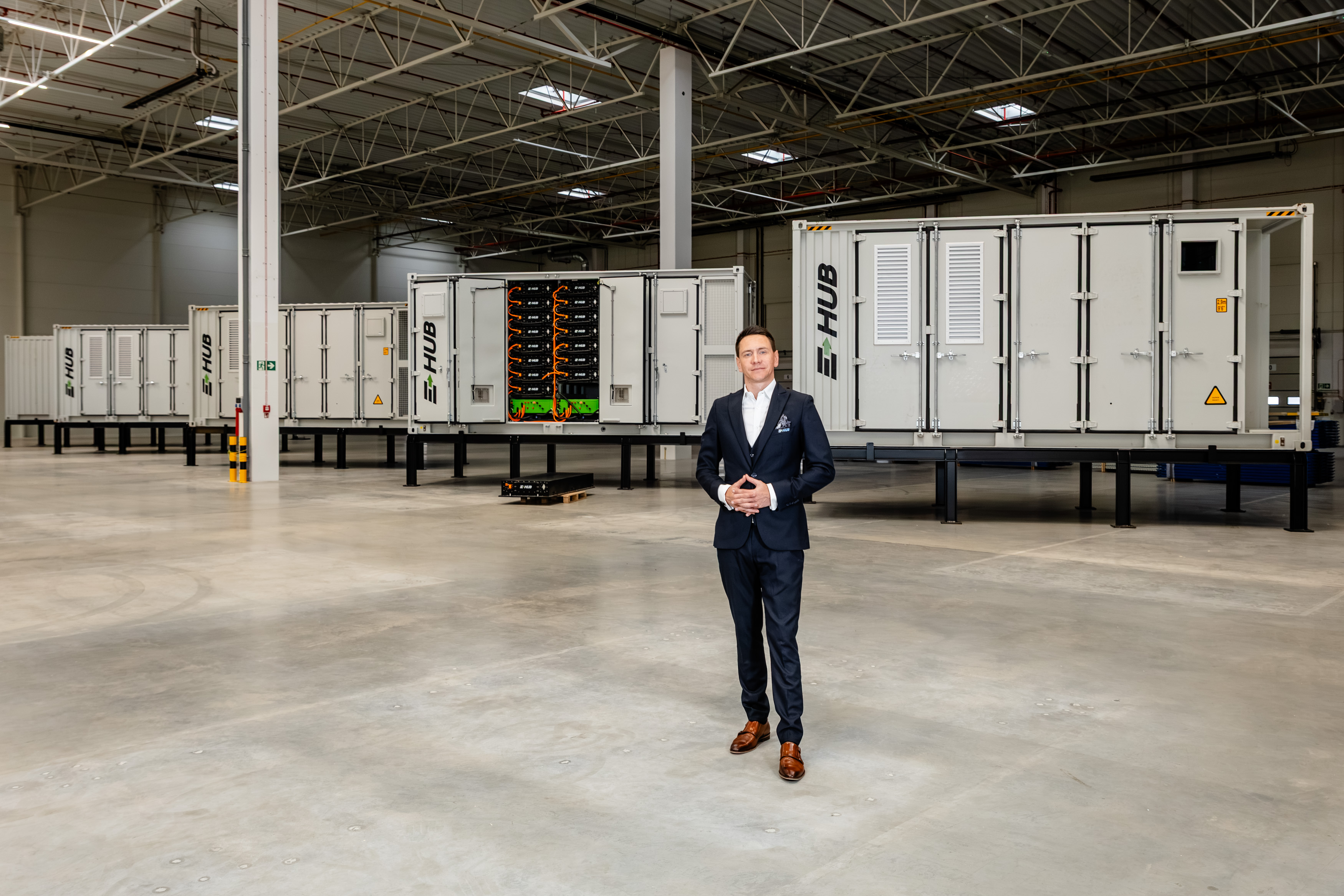
Dominik Waligórski, Head of Sales at Polish company E-Hub Energy. Photo by Eugene Zhyvchik
The role of storage in the energy system of the future
How does E-Hub see its next stage of growth as the market expands?
We are currently at the production preparation stage, testing a fully automated battery pack assembly line at our factory in Legnica. We expect to reach full production capacity between the end of 2026 and Q1 2027.
In the first phase, we plan to produce systems with a total capacity of 1.2 GWh per year, then scale up to 5 GWh. Our key markets are the EU, Ukraine, and the UK. We are also exploring opportunities to enter the US market.
Interest in our solutions is high. We are in negotiations with partners on large-scale energy storage projects in Poland. Once we have agreed this with them, we will be able to disclose the details and talk about our involvement. At this stage, the projects in question have a combined capacity of several GWh.
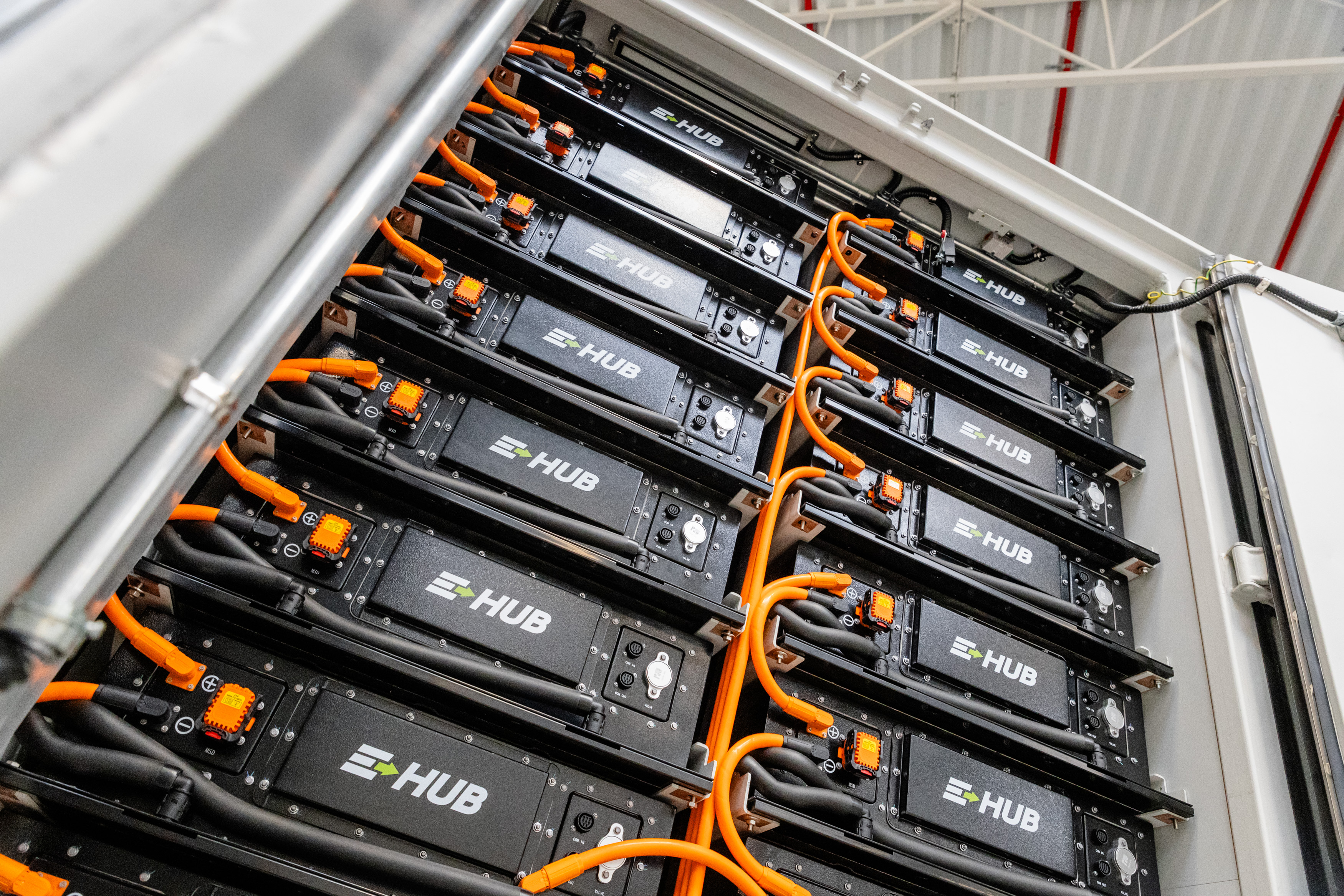
E-Hub Energy factory in Poland. Photo by Eugene Zhyvchik
How do you think the energy storage market will change over the next three to five years?
Storage will become part of integrated energy solutions. The larger the share of solar and wind generation, the more important it will be to store energy and use it when it is needed most — and to respond quickly to the requirements of the grid.
Discharge duration — the time over which a storage system can deliver energy at a given power — will also get more attention. In Texas, for example, projects with a discharge duration of four hours or more are already being developed.
Cybersecurity will become a priority along with equipment upgradability and the ability of storage systems to actively support the grid.
That is why systems installed today should be designed with the future needs of the market in mind.