More than six in ten Mastercard card payments in Ukraine today happen via NFC – a tap of a phone or other device. Behind that shift lies more than three decades of digital transformation of the country’s financial system, one in which Mastercard has played one of the central roles.
With its support, Ukraine launched the Ukrzaliznytsia app, the National Cashback program, and the Diia.Business platform to support entrepreneurs.
The company has signed memoranda with a number of Ukrainian ministries and the National Bank of Ukraine, and in November 2025 it launched a five-year digital country partnership with the government to deepen the country’s digitalization.
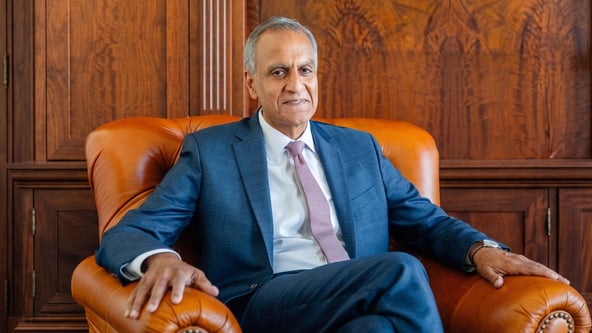
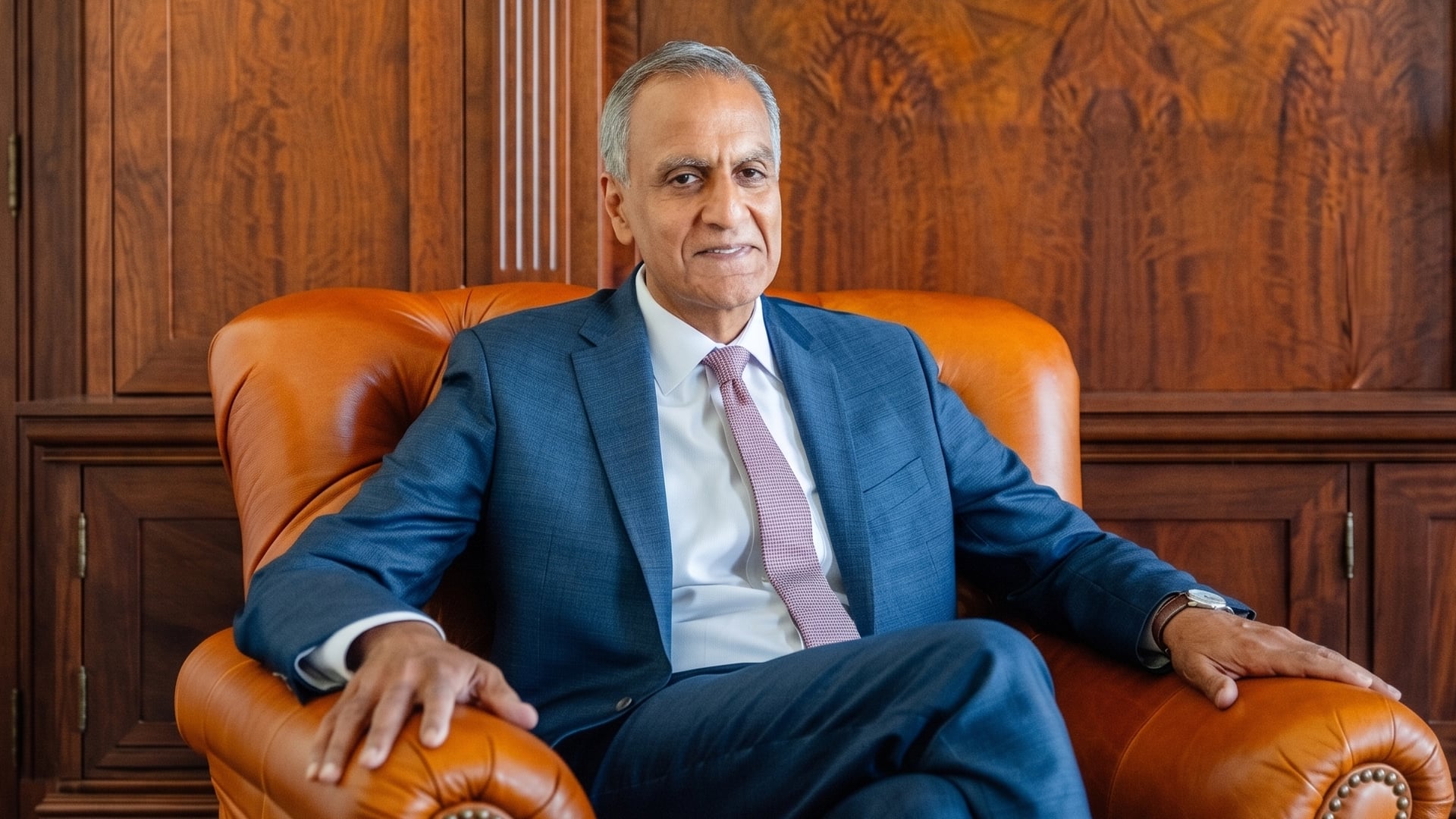
In this context, Mastercard is moving well beyond classic payments technology company. How payment systems are becoming an instrument of resilience and economic growth for the countries, and what Ukraine needs to fully secure its place in the global digital economy — we discussed with Richard Verma, Chief Administrative Officer of Mastercard on the sidelines of the Ukraine Recovery Conference in Gdansk.
Geopolitics and the architecture of payments
Do you agree that payment infrastructure today has not only an economic dimension, but a geopolitical one?
I think people now realize that financial infrastructure is part of a countryʼs critical infrastructure. The exchange of value, however youʼre doing it, is critically important to millions of people in that country and billions around the world. The world is becoming more multipolar, and that breakdown in international harmonization makes it more challenging to maintain a global, interconnected payments network.
At the same time, technology is moving at light speed, much faster than global norms, laws, and regulations. For a global company headquartered in the United States, that means we have a bigger role to play and more responsibility. The key is to be there for people not only in good times but also during difficult geopolitical moments, reassuring them that we are a trusted partner. And we take that responsibility very seriously.
China, India, and other countries are developing alternative payment systems to reduce dependence on Western networks. Does this inevitably lead to fragmentation, and what would that mean for global stability?
Consumers want a choice at the end of the day – whether to pay by debit card, credit card, account-to-account, digital currency or some other method developed domestically. That’s okay; we’re living in a very innovative, transformative space.
But the fragmentation point is the right one to raise, because what matters is interconnectedness and harmonization. If you travel outside a given jurisdiction, can you still use that payment method? Is it secure at scale? We see these as good, creative innovations developed in consequential markets, and partnering with these countries on their efforts is important. We like that sense of competition as it gives consumers choice — as long as that competition remains fair and transparent.
Let’s take as an example international postal service, aviation and telecommunications — they all rely on common global standards developed over many years. Payments can follow the same path by building a global architecture that also adapts to new challenges such as AI, privacy and digital assets.
How important is it to maintain a resilient global payments ecosystem, and how does Mastercard see its role there?
We’re an exceptionally global company, processing around 175 billion transactions a year, with roughly 150 million points of acceptance in over 200 countries. That’s what people expect from us: wherever they travel, they want safety, security and confidence that their card will work. So, we take our role in all the markets where we operate seriously — being a good employer, contributing to the social fabric, and bringing people into the digital economy. Last year, we hit one of our company goals: bringing a billion people into the digital economy, along with tens of millions of small businesses. We’ve now committed to connect and protect another 500 million people and small businesses on their path to financial health.
That commitment is reflected in our investment across Europe. Today, we have around 9,000 employees across Europe, operate more than a dozen data centers, and have made a commitment to build three more in Paris. We’re a global company, but we’re building a more resilient and increasingly localized network that can continue operating even in the event of a major disruption.
Future trends in payment architecture
Central bank digital currencies are being developed in dozens of countries. How will they reshape payment architecture?
This is a fascinating area that has developed rapidly in just a few years. Our role has been to partner with central banks as they build their CBDCs. We have a global platform and are largely agnostic about how value is exchanged — you may pay in stablecoin, in fiat, or in other forms.
What we provide is a secure, stable, interconnected, fast, and trusted payment network, and that holds even as the underlying methodologies change. Weʼve embraced these new approaches, and as long as the rules are fair and transparent, we think we can be a strong partner and a great platform for people in this space.
AI is already used to detect fraud, but it’s increasingly a tool for attacks too. How do you assess the threats against opportunities?
AI is one of those innovations that has outpaced policymaking globally. First, it’s been an incredible innovation in a very short period. Second, it lets us work smarter and more efficiently than we could before. At Mastercard, we’ve embraced AI and will continue to do so with proper guardrails.
Fraud protection is something we’ve worked on for years, not days or weeks. Trust is at the core of who Mastercard is, and in milliseconds, when you tap your card, AI tools go to work, distinguishing a legitimate transaction from a fraudulent one in under a second. Our responsibility is to stay one step ahead of criminal actors who are constantly looking for new ways to exploit these technologies.
Trust is at the core of who Mastercard is, and in milliseconds, when you tap your card, AI tools go to work, distinguishing a legitimate transaction from a fraudulent one in under a second.
At the same time, we have to use AI responsibly. It has enormous potential to improve peopleʼs lives, strengthen businesses and support economic growth. Thatʼs why we also need to be at the table with policymakers helping shape global norms and standards that simply don’t exist yet in any agreed international framework.
Many people worry that AI will replace jobs. How is it changing Mastercardʼs approach to its workforce?
Weʼre not looking at AI as a way to reduce staff. Hopefully, it will make people more efficient and productive by reducing the time spent on labor-intensive tasks. If AI also helps us draw better insights from large data sets, thatʼs another powerful benefit. Weʼre not thinking about AI as a way to reduce the workforce. In fact, weʼll continue to need even more talent, engineers and experts in this field.
Apart from AI, what will be the next big thing shaping people’s payment experiences?
Agentic commerce. Imagine an agent you trust, who’s been verified, that knows how to make your life a little easier and can assist you with purchases or transactions, even investments. That’s an interesting frontier within AI, and with the right safeguards, I think it can be a huge area of growth.
The cooperation with Ukrainian government
Mastercard and the National Bank of Ukraine signed a memorandum on cybersecurity. What exactly does that collaboration involve?
As a company, we’ve spent $12.6 billion on cybersecurity innovation since 2019 — frankly, more than most countries have spent on the subject.
We acquired Recorded Future, an advanced threat-intelligence company, and we run cyber fusion centers around the world, including in Europe, where we sit with law enforcement and analyze anonymized data flowing across the Mastercard network to detect unusual patterns of activity.
Last year, 175 billion transactions passed through our network — we learn a great deal from that scale, and we’re able to detect vulnerabilities others might miss.
We’re not a law enforcement agency, and we take privacy seriously, but where we can work with trusted government partners to protect the public ecosystem, we should. Thatʼs exactly the kind of public-private partnership we believe is essential to strengthening cyber resilience.
Last year, 175 billion transactions passed through our network — we learn a great deal from that scale, and we’re able to detect vulnerabilities others might miss. By sharing that expertise, we believe we can make a nation’s infrastructure stronger.
Through the MoU with the National Bank of Ukraine, we’re sharing expertise, providing insight on cyber threats, strengthening preparedness and incident response, and promoting secure digital practices across the financial sector. It complements the broader Digital Country Partnership we signed with the Ukrainian government, which has four pillars — one of them is cybersecurity.
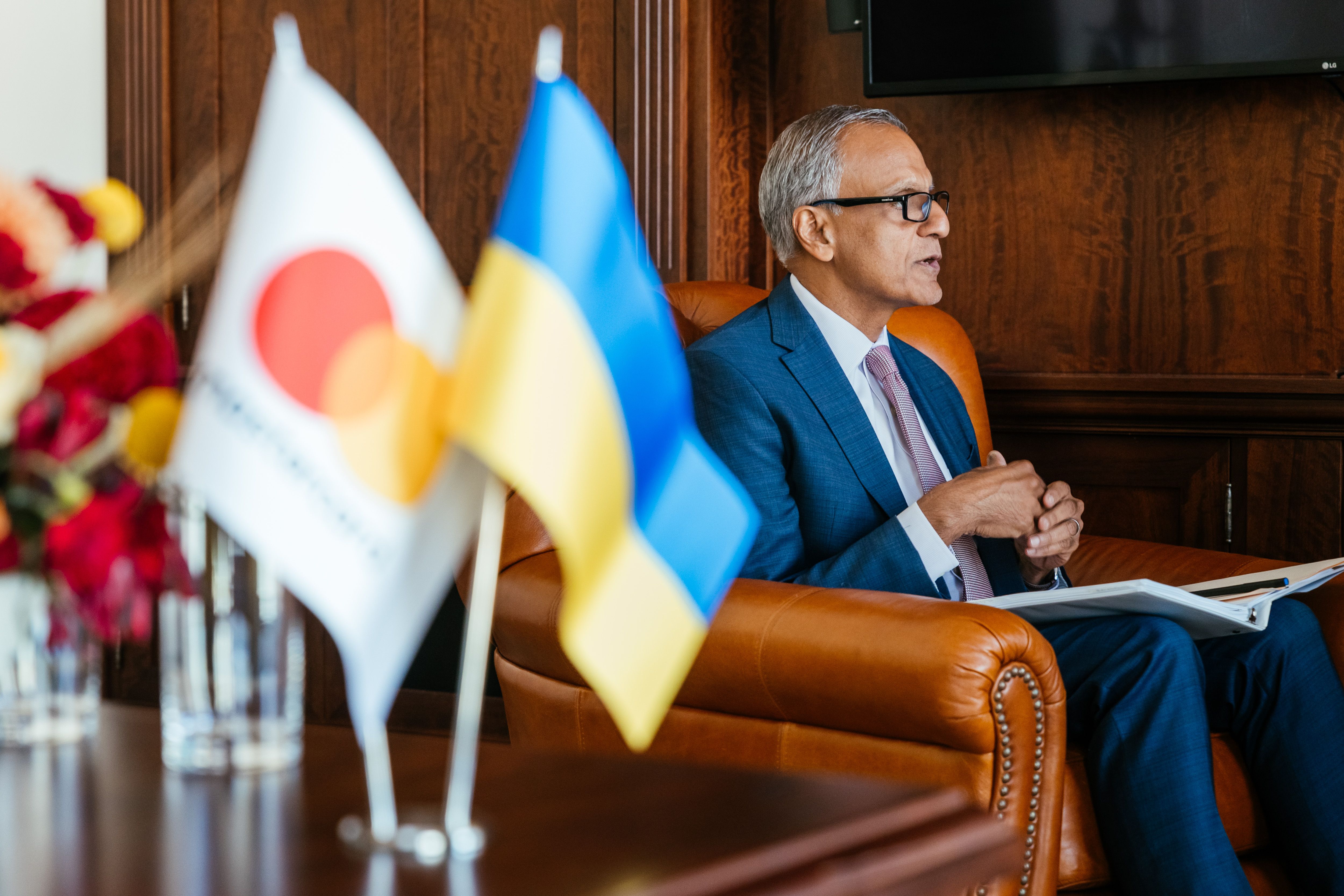
Richard Verma, Chief Administrative Officer, Mastercard. Photo by Eugene Zhyvchik
You were personally involved in Ukraine’s economic recovery as a U.S. Special Representative. Has your understanding changed now that you’re looking at it through the lens of a technology company rather than diplomacy?
It was an honor — to visit Ukraine multiple times, to get to know the country’s leadership, and most of all to meet the people of Ukraine and see their strength, courage and resilience.
Having spent half my career in government and half in the private sector, I know the government can drive change at scale, set long-term priorities and create the conditions for growth, while the private sector brings innovation, technology, expertise, and can deliver that last mile of help that people actually need.
In a country in the middle of a war, it has to be the public and private sectors coming together to support people, and I think that’s exactly what’s happened over the last four years — thanks to the courage of Ukrainians, the leadership of the government, the innovation of the private sector, and the commitment of allies around the world.
For Ukraine, the short term holds continued challenges, but the long term is very bright.
Next steps for Ukraine
Ukraine is one of the leaders in digital payments adoption, even amid active war. What’s at the core of that progress, in your opinion?
Ukraine has an incredible, well-educated workforce and has been a tech hub for a long time, so it’s no surprise it’s also a leader in digital payments. That’s exactly why the Digital Country Partnership we’ve entered into with the Ukrainian government is so exciting.
It has a number of pillars: financial inclusion of citizens and small businesses, modern digital public services; travel and mobility — including digital solutions for transport and tourism; digitization and innovation, including AI, digital identity and GovTech — for government services to further move online; cyber resilience and payment security to help strengthen critical infrastructure and withstand evolving cyber threats.
In many ways, this is the perfect alignment between a global technology company and a technically advanced country that wants to do more.
Looking ahead 10 years, how do you see Ukraine evolving in terms of its economy, digital infrastructure and global integration?
It’s a continued set of reforms the government is already working on, and continued progress on financial inclusion. 67% of Mastercard card payments in Ukraine are tokenized and are done through mobile wallets, while the country’s overall financial inclusion index stands 88% — and growing both numbers, while keeping the services on offer modern and efficient, matters a great deal. I know this is an exceptionally hard period, with the war now stretching past four and a half years, and that’s first and foremost on people’s minds.
But you can’t wait for the war to end to start rebuilding and investing. The international community, the private sector and the non-profit sector have already made significant investments during this period, and they’ve delivered real benefits — though there’s much more to be done. So, I’d say: the short term holds continued challenges, but the long term is very bright.